


If you upload the ACH file generated by PR160 to your bank, chances are you will need to fix the formatting after your upgrade to version 10. Some banks require the 94-character fixed width format, rather than the sequential format that is the Lawson default. Here are the steps to update your ACH file format.


Sync has seven phases.

When it fails, it will create a locked process and it can be resumed from the last completed phase.

All errors are written to lawdir/system/security_provisioning.log. Sync can be cancelled altogether with ssoconfig.
Sync will always identify some conflicts. Follow the instructions in the ISS Configuration guide to know which conflicts can safely be ignored.
For example, it might fail to sync an environment identity for a user. Try creating or deleting that environment identity in Landmark under the Gen profile manually using Rich Client, then rerun the sync identities phase.
Once federation is complete use the ISS website for all user maintenance tasks instead of LSA. Grant the actor role SecurityAdministrator_ST to anyone who needs the ability to maintain Lawson user accounts.
Update or rewrite user provisioning scripts to work with the newly federated environment. Use ISS list-based sync functionality.

Here is a simple step-by-step guide on how to setup a distribution group in Lawson for a jobdef.
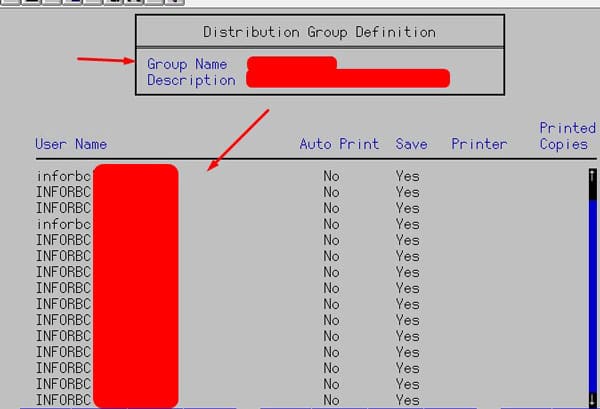
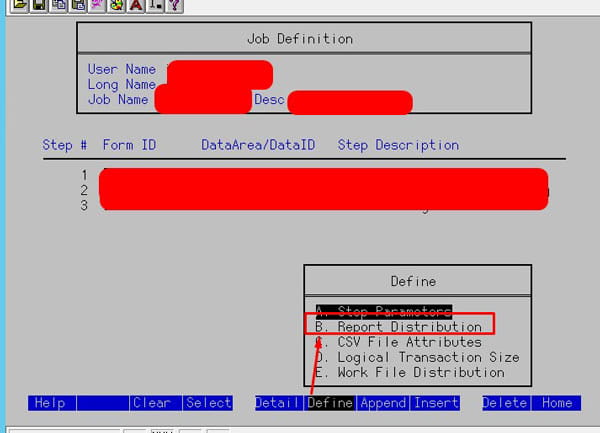
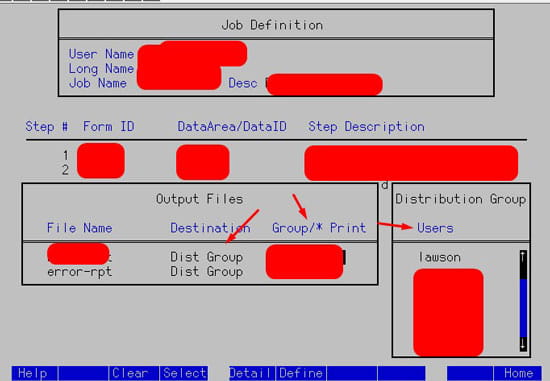
If you found this article helpful, Nogalis offers managed services and expert technical resources to assist with Lawson system configurations like setting up distribution groups. Whether you need help managing user groups, optimizing workflows, or maintaining your Lawson environment, our managed services provide the support you need to ensure smooth operations. Contact us to learn more about how we can assist with your Lawson system.

Problem:
When I click on the LBI bookmark in my Lawson screen, I get an error message stating the URL redirected you too many times. This only happens when using the EDGE browser. It did not happen in Chrome.

Resolution:
Open settings in EDGE and go to Cookies and site permissions>>Cookies and data stored>>Cookies and site data and make sure the Block Third-party cookies is not off.

Turn on the following:

Now refresh cache and clear your cookies.
Note: adding any exceptions may cause the same issue, so make sure to remove any exceptions under Allow or Clear on Exit.


Often our Lawson print queues get cluttered and out of hand. Lawson’s deljobhst command is a really great tool for cleaning up your batch jobs. It can clear the clutter from your user’s print managers, as well as free up some space on your server. Run this command in LID.
For each of these commands, you must provide a “ToDate” in MMDDYY format. So, if you give it an end date of 033119, for instance, you would delete all the selected job history up to March 31, 2019.
You also have the option of providing a user’s account so that you just perform the delete for a specific user. There is also a from date option that allows you to manage job history for a specific date range.
We recommend setting up some of these commands on a schedule to keep your Lawson server happy & healthy.
Here is a summary of the command:

The -w option will delete all waiting jobs, so jobs in recovery and jobs with Invalid Parameters. After you run this, there will not be any jobs listed in the waiting queue for the specified user (or all users) up to the specified run date.

The -c option deletes all completed jobs. This is a great way to clean up user’s job schedule print manager lists. This action removes the data from the QUEUEDJOB table. It does not remove print files.

The -r option removes all the print files associated with batch jobs, that were created up to the specified to date. This will help keep your server from getting too cluttered. Make sure you back up your print directory, especially if you have a retention policy at your organization. If you run the command so that it deletes ALL print files (so delete everything up to today), it will delete your entire print directory. Don’t panic! It’ll be created the next time a user runs a batch job.


There are times that Infor support will ask for a .cbl of a program in your Lawson system.
When working with Infor Lawson systems, you may encounter situations where Infor support requests a .cbl file for a specific program. This is because .cbl files contain the source code for programs written in COBOL, a language commonly used in business software like Lawson.
Why Infor Support Might Ask for a .cbl file:
Resolution :
At the command prompt, type bldsh productline system code program
Example: bldsh test IC IC130
This will create a .cbl in your LAWDIR/productline/xxsrc directory.

Many Lawson screens have comment buttons that open a drill-around screen with different comment types. If you have ever wished to query these comments for reporting or other user interfaces, you may have noticed that they are difficult to find. Infor has “hidden” them in tables with the “L_H” prefix. This is the “header” for the comment. If there are any details that spill over the available characters in the commend, there will also be a record in the corresponding L_D table. The naming convention is “L_HXXX” or “L_DXXX” where “XXX” is the prefix of the table that feeds screen where you add the comments. For instance, Requisition Header comments can be found in “L_HRQH” and “L_DRQH”. Join the comments to your main record using the “L_INDEX” column in the parent table.

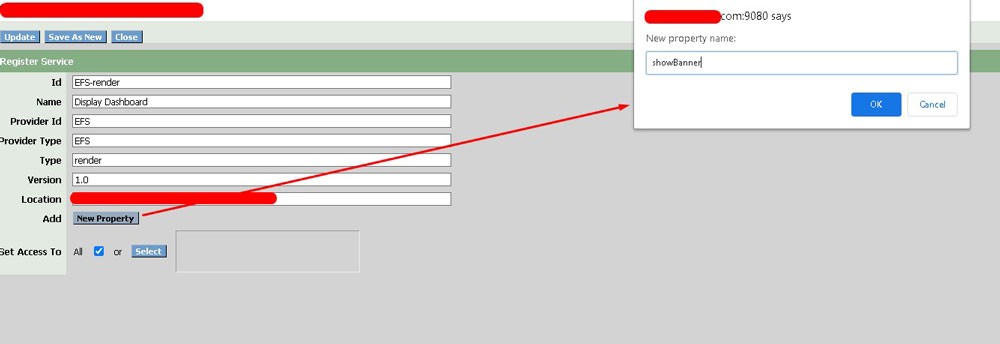
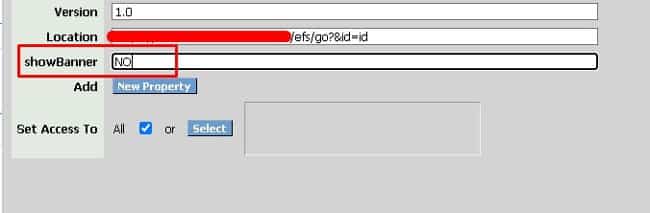
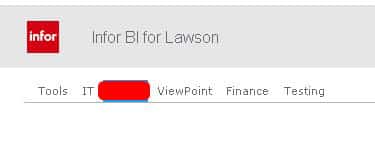
Before:
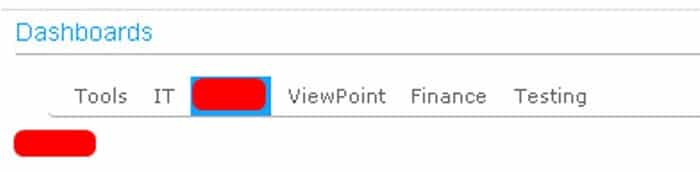
After:
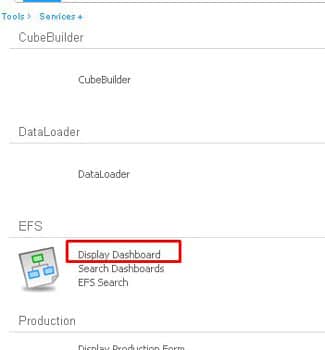
If you found this article helpful, Nogalis offers managed services and technical resources to assist with customizing and maintaining your Lawson Business Intelligence dashboard. Whether it’s tasks like removing logos or other system configurations, our team provides the support you need. Contact us to learn more about our managed service offerings and how we can assist with your Lawson system needs.