
844-NOGALIS (844-664-2547)
Nogalis, Inc.
  • Link to Facebook
  • Link to X
  • Link to LinkedIn
  • Link to Mail
  • Company
    • News, Events and Articles
    • About Us
  • Products
    • Infor Lawson Data Archive
    • PeopleSoft Data Archive
    • Oracle Data Archive
  • Services
    • Infor Lawson Support
    • Infor Lawson / CloudSuite Consulting
  • Education & Training
  • Support
  • Contact Us
  • Click to open the search input field Click to open the search input field Search
  • Menu Menu

Archive for category: News

You are here: Home1 / News, Events and Articles2 / News

The Cost Illusion In ERP: Why Companies Overspend

News

A recent article in Forbes argues that companies are overspending on enterprise resource planning (ERP) systems for a surprisingly simple reason: they’re focused on software pricing instead of long-term value. In this article, author Manish Goyal (Co-Founder of Dynamics Square) explains that ERP overspending rarely comes from the license itself. The bigger issue is how organizations buy, customize, and manage ERP systems over time. Many businesses still estimate for peak usage, over-purchase licenses, and lock into rigid contracts — only to discover later that large portions of the system go underused. The article notes that cloud ERP hasn’t eliminated waste; it has simply changed how waste appears. Instead of large upfront costs, companies now face recurring subscription expenses that can quietly grow year after year without active oversight. Another major cost driver is over-customization. While tailored workflows may seem beneficial initially, heavy customization often increases maintenance complexity, upgrade difficulty, and long-term ownership costs. Rather than focusing solely on negotiating discounts, the article recommends a more value-based approach to ERP. That includes tying licensing to actual business outcomes, adopting modules gradually, reviewing system usage regularly, and building flexibility into contracts. Goyal’s core takeaway is that ERP cost problems are usually caused by misaligned decisions, not expensive software. Organizations that continuously optimize usage and align ERP investments with business goals are far more likely to control costs and improve ROI.

 

For Full Article, Click Here

05/20/2026
https://www.nogalis.com/wp-content/uploads/2016/06/consultingdollars.jpg 214 320 Angeli Menta https://www.nogalis.com/wp-content/uploads/2013/04/logo-with-slogan-good.png Angeli Menta2026-05-20 10:26:102026-05-18 13:28:31The Cost Illusion In ERP: Why Companies Overspend

Setting up Drill options

Articles, Frontpage Article, News

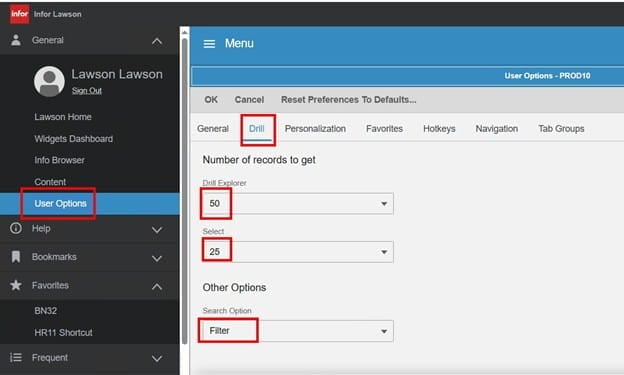
You can specify the number of records to display at one time.

  1. From the Navigation menu, select General > User Options.
  2. Click the Drill tab and select values for these fields:
  3. Option Description
    Number of records to get Specify the number of records to display at one time.

    You can specify the number of records to display for Drill Explorer,

    Select, and List.

    Other Options Select between Find and Filter search options.
  4. Click OK. And you’re done. Now you can view the filtered options you set.

That’s all there is to it.

05/19/2026
https://www.nogalis.com/wp-content/uploads/2026/05/Setting-up-Drill-options.jpg 470 470 Angeli Menta https://www.nogalis.com/wp-content/uploads/2013/04/logo-with-slogan-good.png Angeli Menta2026-05-19 08:34:552026-05-18 12:39:33Setting up Drill options

Infor named a Leader in 2026 Gartner® Magic Quadrant™ for Warehouse Management Systems

News

Infor has once again earned a top spot in the warehouse technology space, being named a Leader in the 2026 Gartner® Magic Quadrant™ for Warehouse Management Systems — marking the eighth consecutive year the company has received the recognition. The announcement highlights Infor’s continued push to modernize warehouse operations through cloud-based technology, AI, and automation. Its Warehouse Management System (WMS) platform is designed to help businesses manage increasingly complex fulfillment demands through tools for labor management, inventory tracking, task coordination, and even 3D warehouse visualization — all within a single platform. What stands out most in this year’s announcement is Infor’s growing focus on practical AI applications inside the warehouse. Rather than positioning AI as a future concept, the company is emphasizing measurable operational gains happening today. One example is its Pick Path Optimization capability, which uses AI and machine learning to guide warehouse workers along more efficient picking routes. According to Infor, customers using the feature have seen up to 25% less travel distance and 15% faster picking times — improvements that can significantly impact labor efficiency and fulfillment speed. Vishal Minocha said the recognition reflects Infor’s focus on delivering real operational outcomes rather than innovation for innovation’s sake. The company also continues to expand its use of generative AI, agentic AI, and advanced analytics across supply chain operations. The broader takeaway: warehouse technology is evolving quickly, and companies are increasingly looking for AI tools that produce tangible, day-one value instead of long-term experimentation.


For Full Article, Click Here

05/18/2026
https://www.nogalis.com/wp-content/uploads/2020/03/warehouse-management-storage-logistics.jpg 399 600 Angeli Menta https://www.nogalis.com/wp-content/uploads/2013/04/logo-with-slogan-good.png Angeli Menta2026-05-18 12:32:192026-05-18 12:32:19Infor named a Leader in 2026 Gartner® Magic Quadrant™ for Warehouse Management Systems

How to Update the ADFS Token-Signing Certificate

Articles, Frontpage Article, News

Lawson SSO issue

We are having an issue with ADFS SSO login with Lawson and I need someone to pull the updated metadata.

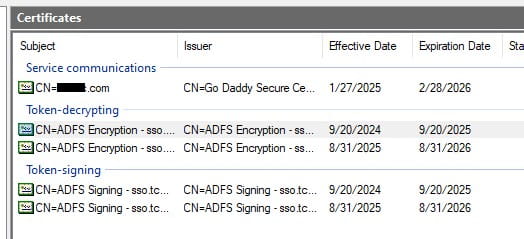
ADFS auto creates a new ‘secondary’ decrypt and signing cert 20 days prior to expiration so on 8/31-ish It then promotes the secondary to primary 5 days later so that would have been today.

Update the ADFS Token-Signing Certificate

When the ADFS Token-Signing certificate is updated on the ADFS server, it will have to be imported to Lawson and Infor OS.

Someone with admin rights on the ADFS instance will need to export the certificate and provide you with the “.cer” file before these tasks can be completed.

Update the Certificate in Lawson

Log onto the Lawson Server

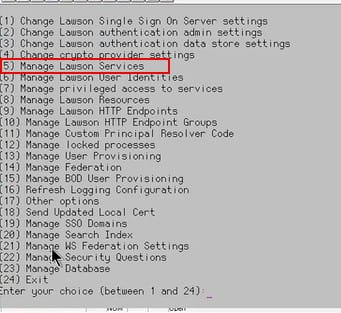
Start a ssoconfig -c session

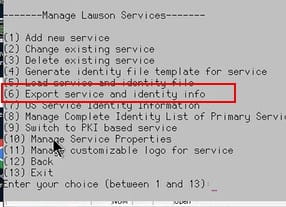
Export Services

  1. Select Manage Lawson services
  2. Select Export Services and Identity Info
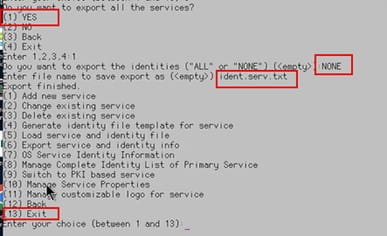
  3. Choose yes, for all services, None for identities and give it a file name

Check the file for the Service ID name and make a note of it

In this case, LSF_ADFS is the service name.

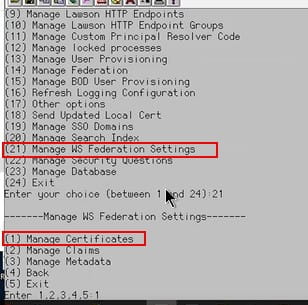
Go to “Manage WS Federation Settings” > “Manage Certificates”

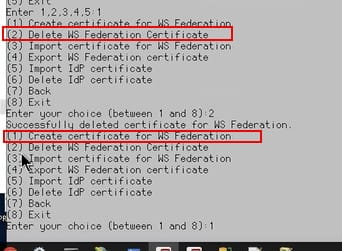
Select “Delete WS Federation Certificate”

Select “Create certificate for “WS Federation”

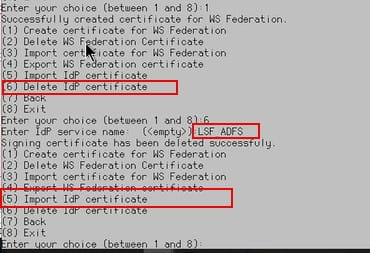
Select “Delete IdP certificate”

Enter the service name of your ADFS service

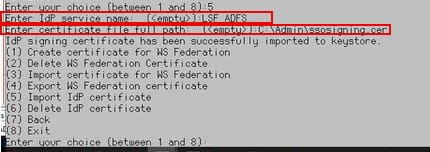
Select “Import IdP Certificate”

Enter the service name of your ADFS service

Provide the full path where you have the token-signing certificate saved

Verify External Portal work (goes through ADFS)

Update the Certificate in Infor OS

Log into the Infor OS server as the LAWSON user

go to STSAdminUI


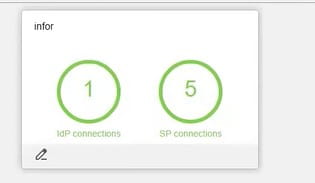
Click on idP Connections

click on Edit

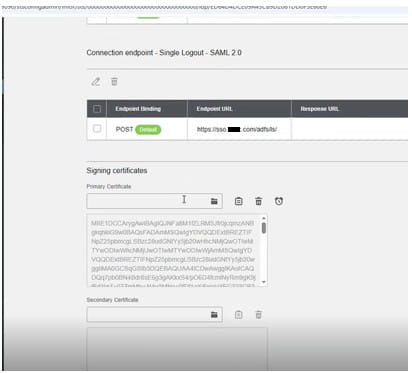
Scroll down and you will see that the signing cert has changed

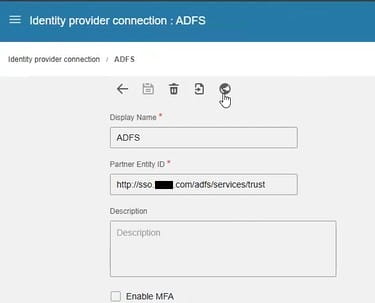
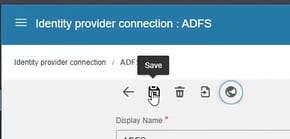
Go back to the top and click on the world

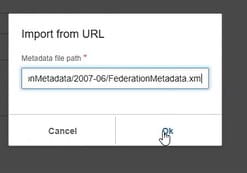
Enter the URL that Admin provided and click on OK

Click on save

Now test your connections


05/15/2026
https://www.nogalis.com/wp-content/uploads/2026/05/How-to-Update-the-ADFS-Token-Signing-Certificate.jpg 470 470 Angeli Menta https://www.nogalis.com/wp-content/uploads/2013/04/logo-with-slogan-good.png Angeli Menta2026-05-15 08:21:142026-05-08 11:33:50How to Update the ADFS Token-Signing Certificate

Enterprise AI Adoption Impact Index Finds More than Half of Businesses Struggle to Scale AI. New Infor Solutions Aim to Close the Gap

News

Infor is betting that the future of enterprise AI isn’t just about smarter tools — it’s about delivering measurable business outcomes. In a recent Press Release, Infor unveiled expanded capabilities across its Velocity Suite and introduced an enhanced version of its Agentic Orchestrator, both aimed at helping companies move beyond AI pilots and into real-world scale. The timing makes sense. According to Infor’s new Enterprise AI Adoption Impact Index, nearly half of organizations are still stuck in the early stages of AI deployment, despite 80% of business leaders saying they feel capable of managing AI implementations. The biggest blockers? Data security and compliance concerns, lack of internal AI talent, and uncertainty around ROI.

Infor’s answer is a more industry-specific approach to AI. CEO Kevin Samuelson emphasized that AI agents need deep operational context to be effective — a healthcare purchasing agent shouldn’t behave the same way as one built for manufacturing. The updated Velocity Suite now includes industry-focused AI agents, prebuilt automation libraries, curated AI use-case packs, and managed services support after deployment. Infor also highlighted a new warehouse optimization tool that reportedly reduced travel distance by up to 25% for some customers.

Meanwhile, the enhanced Agentic Orchestrator is designed to coordinate complex AI workflows across systems while maintaining transparency and human oversight. New capabilities focus on orchestration, interoperability, and observability — key concerns for enterprises trying to trust AI with mission-critical operations. The broader message from Infor is clear: businesses don’t just want AI experimentation anymore. They want secure, explainable, industry-ready AI that can deliver value quickly and predictably.


For Full Article, Click Here

05/14/2026
https://www.nogalis.com/wp-content/uploads/2019/08/AI-inventory-erp-integration.jpg 299 500 Angeli Menta https://www.nogalis.com/wp-content/uploads/2013/04/logo-with-slogan-good.png Angeli Menta2026-05-14 08:24:452026-05-18 12:33:52Enterprise AI Adoption Impact Index Finds More than Half of Businesses Struggle to Scale AI. New Infor Solutions Aim to Close the Gap

5 essential steps to bulletproof your endpoint security (and avoid the biggest mistakes)

News

Endpoint security is more important than ever as cyber threats continue to evolve, making proactive protection essential for businesses of all sizes. In an article by N-able, published on CSO Online, the author outlines practical strategies organizations can take to strengthen security, reduce vulnerabilities, and avoid common missteps in endpoint protection. The article emphasizes that strong endpoint security begins with visibility. Businesses can’t protect devices they don’t know exist, so maintaining a complete inventory of laptops, mobile devices, and connected assets is critical. Unmanaged or “shadow IT” devices can easily become entry points for cyberattacks if left unchecked. Another major takeaway is the importance of standardized security policies and automation. Consistent configurations—such as limiting administrator access and controlling unauthorized applications—help close security gaps. The article stresses that manual patching is no longer enough, as cybercriminals move too quickly for slow, human-driven processes. Automated updates and vulnerability remediation can significantly reduce exposure to threats. The piece also highlights the growing need for layered defenses. Traditional antivirus tools alone may miss sophisticated attacks, which is why technologies like Endpoint Detection and Response (EDR) are increasingly valuable for identifying suspicious behavior and containing threats before they spread. Just as importantly, reliable backup and recovery plans help organizations recover quickly if something slips through defenses. The article reinforces that endpoint security isn’t about relying on one tool—it’s about creating a proactive, multi-layered strategy that combines visibility, automation, monitoring, and recovery to build long-term resilience against modern cyber threats.

For Full Article, Click Here

05/13/2026
https://www.nogalis.com/wp-content/uploads/2024/04/data-cyber-security.jpg 398 600 Angeli Menta https://www.nogalis.com/wp-content/uploads/2013/04/logo-with-slogan-good.png Angeli Menta2026-05-13 12:47:042026-05-08 13:07:005 essential steps to bulletproof your endpoint security (and avoid the biggest mistakes)

Lawson Infor Process Automation XML Builder/Parser node with error – ‘X is not defined’

Articles, Frontpage Article, News

Summary of issue: When working on a Lawson IPA Flow issue, there was an IPA Webservice Node call that grabs XML data. This data was then fed into an IPA XML Builder/Parser node and begin to throw an “’X’ is not defined” error.


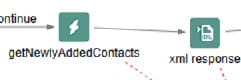
After our IPA WebSvc node “getNewlyAddedContacts” made an API call to return records. It then fed to an XML Builder/Parser node and threw a “’P1’ is not defined error”. We will explain why below.

Even though the “contacts” information was being called successfully, one of the records had bad data.

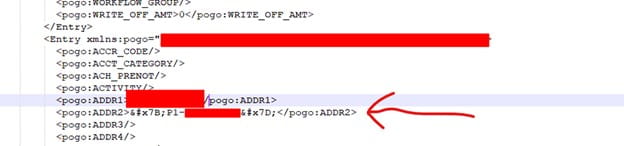
This record specifically had a { (bracket) in one of it’s fields and this somehow got encoded as {

Which resulted in the XML Parser Node in IPA to fail with the “P1” is not defined error.


So, if this happens to your process that is calling on XML formatted data, search your logs for the specific record that “is not defined”.


Good luck!

05/12/2026
https://www.nogalis.com/wp-content/uploads/2026/05/Lawson-Infor-Process-Automation-XML-Builder-Parser-node-with-error-X-is-not-defined.jpg 470 470 Angeli Menta https://www.nogalis.com/wp-content/uploads/2013/04/logo-with-slogan-good.png Angeli Menta2026-05-12 09:01:362026-05-08 11:24:27Lawson Infor Process Automation XML Builder/Parser node with error – ‘X is not defined’

Infor and AWS Bring Agentic AI to Manufacturing at Enterprise Scale

News

Agentic AI is quickly becoming a major focus in manufacturing, as companies look for smarter ways to automate operations, improve efficiency, and scale decision-making across complex workflows. In a recent press release from Infor, the company announced an expanded collaboration with Amazon Web Services (AWS) to bring industry-specific AI agents to manufacturing and distribution environments. The announcement highlights how these AI agents are designed to reason, plan, and act across business processes—moving beyond simple automation into more intelligent, workflow-driven support. The partnership focuses on solving a common challenge in manufacturing: scaling AI from pilot programs to real operational impact. Rather than relying on generic AI tools, Infor emphasizes industry-specific agents that understand manufacturing realities such as supply chains, bills of materials, production schedules, inventory movement, and financial operations. Built natively on AWS infrastructure, these agents aim to help manufacturers deploy AI securely and at enterprise scale. The press release also shares an early customer example through Xpress Boats, which reportedly used Infor’s AI and process mining tools to identify operational bottlenecks and reduce inefficiencies. Infor claims the company achieved measurable improvements, including faster issue diagnosis, reduced returns processing time, and lower expedited shipping costs. Moreover, agentic AI as the next phase of manufacturing transformation—not just helping teams automate repetitive work, but enabling systems to proactively coordinate decisions, surface risks, and improve operational performance across the enterprise.

For Full Article, Click Here

05/11/2026
https://www.nogalis.com/wp-content/uploads/2019/09/digital-supply-chain.jpg 334 500 Angeli Menta https://www.nogalis.com/wp-content/uploads/2013/04/logo-with-slogan-good.png Angeli Menta2026-05-11 09:04:002026-05-08 13:06:51Infor and AWS Bring Agentic AI to Manufacturing at Enterprise Scale

RDS Table Schema Impact on Query Performance

Articles, Frontpage Article, News

When working with large databases, performance is always top of mind. A common question that comes up is whether the number of columns in a table impacts query speed. For example, if you have two tables—one with 10 columns and 100 million rows, and another with 100 columns and 100 million rows—would querying them perform differently? The answer is yes, and here’s why.

Data Volume and Size

The most obvious difference is data size. A table with 100 columns will typically be much larger than one with 10 columns, assuming the column types are comparable. Larger data means more I/O, longer read times, and potentially more strain on memory when queries are executed.

Indexing

Indexes play a major role in query performance. Maintaining and using indexes across 100 columns can be more complex than doing so on 10 columns. If indexing isn’t carefully optimized, the larger table can suffer from slower lookups and more overhead.

CPU and Memory Usage

Querying a wider table generally requires more CPU and memory, particularly if the query involves joins, aggregations, or sorts. Pulling 100 columns into memory is simply more work than pulling 10.

Query Optimization

The database’s query optimizer has to consider more factors when dealing with a wider table. More columns mean more potential execution paths, which can lead to longer planning times and less efficient execution if not managed carefully.

Network Latency

If results are returned over a network, the number of columns requested also matters. A query that selects all 100 columns will send back significantly more data than one with 10, increasing network transfer time and bandwidth usage.

Storage Considerations

Finally, the underlying storage system makes a difference. Wider tables consume more disk space and can be slower to scan, depending on how the database engine stores and retrieves data.

Key Takeaway

Both tables have the same number of rows, but the table with 100 columns will almost always require more resources and may perform slower than the table with 10 columns. This doesn’t mean wide tables are always bad—they may be necessary for certain use cases. But when designing schemas, keep in mind that fewer, well-structured columns usually lead to more efficient queries and easier optimization down the road.


05/08/2026
https://www.nogalis.com/wp-content/uploads/2026/05/RDS-Table-Schema-Impact-on-Query-Performance.jpg 470 470 Angeli Menta https://www.nogalis.com/wp-content/uploads/2013/04/logo-with-slogan-good.png Angeli Menta2026-05-08 08:59:392026-05-08 11:22:59RDS Table Schema Impact on Query Performance

How Cloud Migration Enables Digital Transformation at Scale

News

Cloud migration has become a key driver of digital transformation, helping businesses modernize operations, improve agility, and scale more efficiently. In a recent article on Space Coast Daily, it explores how moving to cloud infrastructure supports long-term business growth and innovation. Rather than being a simple “lift and shift” of systems, cloud migration is presented as an opportunity to evaluate outdated processes and remove operational bottlenecks. As businesses grow, legacy systems can become harder to manage, slowing down teams and limiting flexibility. Cloud environments help solve this by allowing organizations to scale resources quickly, reduce manual maintenance, and adapt to changing demands more effectively. The article also highlights automation as a major benefit. Tasks that once required repetitive manual work—such as deployments, diagnostics, and reporting—can often be streamlined through cloud-based triggers and workflows. Over time, this reduces errors and frees teams to focus on higher-value initiatives. Another key takeaway is improved decision-making through real-time data access. Instead of waiting on delayed reports, businesses can monitor trends, customer activity, and performance metrics as they happen, allowing for faster adjustments and more personalized experiences. Ultimately, the article positions cloud migration not as a one-time IT project, but as an ongoing strategy for innovation—one that helps organizations stay resilient, responsive, and ready to evolve as business needs change.


For Full Article, Click Here

05/07/2026
https://www.nogalis.com/wp-content/uploads/2024/01/cloud-data-it-software.jpg 333 500 Angeli Menta https://www.nogalis.com/wp-content/uploads/2013/04/logo-with-slogan-good.png Angeli Menta2026-05-07 12:40:322026-05-08 12:42:52How Cloud Migration Enables Digital Transformation at Scale
Page 6 of 232«‹45678›»

LEGACY ERP DATA ARCHIVE SOLUTION


Discover how our clients are leveraging AWS services to archive their Legacy ERP data and provide ubiquitous access to users via a light-weight, secure, and read-only web interface. Secure, Fast, Reliable, and Cost Effective. That is the promise of APIX. Follow the link below to find out more and book a discovery call with our data archive specialist.

BOOK DEMO

© Copyright - Nogalis, Inc. 2024
  • Legal
  • Privacy
  • Contact Us
Scroll to top Scroll to top Scroll to top