
844-NOGALIS (844-664-2547)
Nogalis, Inc.
  • Link to Facebook
  • Link to X
  • Link to LinkedIn
  • Link to Mail
  • Company
    • News, Events and Articles
    • About Us
  • Products
    • Infor Lawson Data Archive
    • PeopleSoft Data Archive
    • Oracle Data Archive
  • Services
    • Infor Lawson Support
    • Infor Lawson / CloudSuite Consulting
  • Education & Training
  • Support
  • Contact Us
  • Click to open the search input field Click to open the search input field Search
  • Menu Menu

Archive for category: News

You are here: Home1 / News, Events and Articles2 / News

Beyond the hype: The enterprise AI architecture we actually need

News

Enterprise AI is moving away from the idea of a single “all-in-one” platform and toward something more layered, modular, and grounded in real organizational constraints. In a recent article for CIO.com, chief digital officer and futurist Sumantra Naik argues that the future of enterprise AI will look less like a unified system and more like a structured architecture made up of multiple coordinated layers. Naik’s main point is that early generative AI enthusiasm often overlooks how enterprises actually operate. In reality, companies rely on complex ecosystems of systems like SAP, Salesforce, Workday, and ServiceNow — each holding governed, high-value data that can’t easily be centralized or replaced. Instead of forcing everything into one model, the emerging approach is a federation of AI capabilities. At the base are “native AI” systems embedded directly into enterprise platforms, where models understand the context and structure of the data without it leaving the system boundary. Alongside this sits “sovereign private AI,” designed to handle internal tools, bespoke applications, and fragmented knowledge systems that don’t fit neatly into vendor ecosystems. These models are meant to extend AI capabilities across the long tail of enterprise data. Above these layers is orchestration — the coordination layer that connects agents, data sources, and workflows across the organization. This is where AI becomes operational, rather than just experimental. The key takeaway is that enterprise AI success won’t come from a single breakthrough platform. It will come from a layered architecture that respects existing systems, governance requirements, and real-world complexity, while still enabling intelligent automation across the business.

 

For Full Article, Click Here

06/05/2026
https://www.nogalis.com/wp-content/uploads/2019/08/AI-inventory-erp-integration.jpg 299 500 Angeli Menta https://www.nogalis.com/wp-content/uploads/2013/04/logo-with-slogan-good.png Angeli Menta2026-06-05 10:54:232026-06-02 12:57:05Beyond the hype: The enterprise AI architecture we actually need

Stop Cleaning Your Data. Use AI To Figure Out Which Info Matters

News

Enterprise data strategy is being challenged by a counterintuitive idea: maybe cleaning and organizing data first is the wrong way to unlock AI value. In a recent article for Forbes, John Sviokla, HBS Executive Fellow and co-founder of GAI Insights, argues that many organizations are over-investing in data preparation while under-investing in finding the actual signals that drive decisions. The article opens with a sharp critique of the common enterprise mindset: “get your data ready first.” While this approach feels safe, Sviokla argues it often delays real AI value and leads companies to perfect datasets that may not even contain useful insights. Instead, the article proposes a shift toward a “signal-first” strategy. The key idea is simple: businesses should first identify which decisions matter, and then work backward to determine what data actually influences those decisions. This is where concepts like expected value of perfect information (EVPI) come in — if better information wouldn’t change a decision, then cleaning it adds little value. Sviokla also highlights that AI itself is better suited to messy, unstructured data than traditional analytics. Customer feedback, call transcripts, sensor data, and other “dirty” inputs often contain richer signals than highly structured but sanitized datasets. To illustrate the idea, it points to companies like Verisk Analytics, which built its business by aggregating real-world insurance and risk data tied directly to underwriting and claims decisions — effectively treating data acquisition as signal acquisition, not storage hygiene. The broader message is a reversal of conventional wisdom: AI shouldn’t wait for perfectly governed data. Instead, it should be used to discover which data is actually valuable in the first place. In this view, clean data without signal is just overhead — while even messy data can be a competitive advantage if it helps improve real decisions.


For Full Article, Click Here

06/04/2026
https://www.nogalis.com/wp-content/uploads/2018/06/crm-data-big-data.jpg 338 600 Angeli Menta https://www.nogalis.com/wp-content/uploads/2013/04/logo-with-slogan-good.png Angeli Menta2026-06-04 10:38:532026-06-02 12:45:59Stop Cleaning Your Data. Use AI To Figure Out Which Info Matters

Flexform Broke after adding Memory to Lawson Server

Articles, Frontpage Article, News

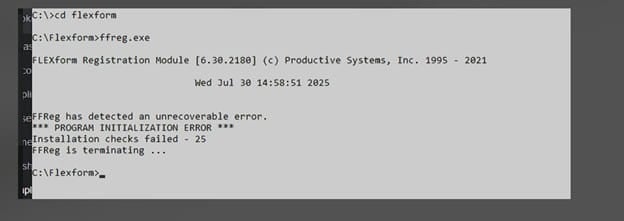
After updating the memory on the application server the flexform application started having issues with printing. The Memory increase was reverted and decreased it to what it was(16g).

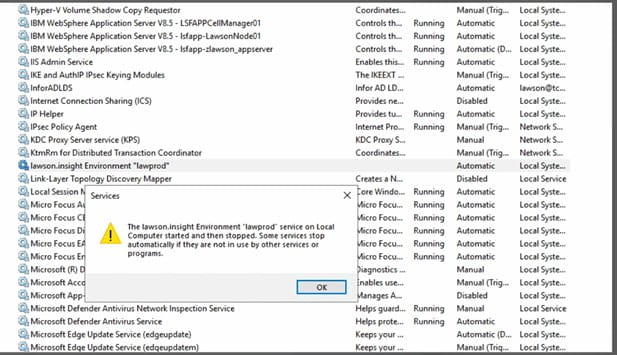
At that point, admin was not able to get the Lawson service to run. The lawson.insight Environment “lawprod” service on Local Computer started and then stopped. Some services stop automatically if they are not in use by other services or programs.

Resolved by rebooting all three servers (DB, LMK, APP).

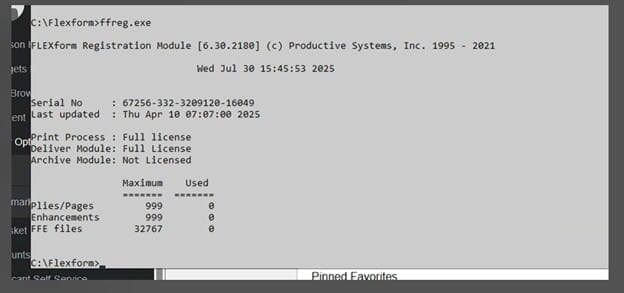
To add memory to the application server and not impact Flexform, you must work in tandem with Flexform so that they can get a new license implementation based on the new memory added.


06/03/2026
https://www.nogalis.com/wp-content/uploads/2026/05/Flexform-Broke-after-adding-Memory-to-Lawson-Server.jpg 470 470 Angeli Menta https://www.nogalis.com/wp-content/uploads/2013/04/logo-with-slogan-good.png Angeli Menta2026-06-03 08:11:312026-05-28 11:33:32Flexform Broke after adding Memory to Lawson Server

Why Data Is Becoming The New Executive Language

News

Data is no longer just something executives review — it’s becoming the shared language they use to run the business. In a recent article for Forbes, financial services executive Matthew C. Meade argues that leadership is shifting from intuition-led decision-making to data-fluent strategy, where analytics plays a central role in how executives communicate, decide, and execute. The core idea is simple: modern organizations generate too much information for instinct alone to keep up. As a result, leaders are increasingly relying on data to guide everything from customer strategy to operations and financial planning. One of the biggest shifts is in customer understanding. Instead of broad market assumptions, executives now have access to granular behavioral data — tracking how customers engage, buy, and retain over time. This enables more personalized experiences and better product alignment with real user needs. Data is also improving strategic clarity. Real-time dashboards and analytics platforms allow leadership teams to continuously monitor performance, validate assumptions, and adjust direction faster than traditional reporting cycles ever allowed. Another major impact is decision speed. With real-time insights replacing delayed reporting, executives can respond faster to market changes, improving agility in areas like pricing, resource allocation, and operations. Finally, data is driving operational efficiency by exposing bottlenecks, cost overruns, and underperforming areas that might otherwise go unnoticed. The result is a more continuously optimized organization. Meade’s key takeaway is that data doesn’t replace executive judgment — it enhances it. The most effective leaders today are those who can combine experience and intuition with a fluent understanding of analytics, using data as the common language of modern business decision-making.


For Full Article, Click Here

06/02/2026
https://www.nogalis.com/wp-content/uploads/2025/08/IOT-data-tech-IT-computing.jpg 250 444 Angeli Menta https://www.nogalis.com/wp-content/uploads/2013/04/logo-with-slogan-good.png Angeli Menta2026-06-02 11:47:222026-06-02 11:47:22Why Data Is Becoming The New Executive Language

Why Structured Data May Be AI’s Next Enterprise Frontier

News

Enterprise AI (artificial intelligence) is expanding in a new direction — away from just language and unstructured content, and toward the structured data that actually runs businesses. In a recent article for Forbes, AI expert Ron Schmelzer explains that while large language models have dominated the AI conversation, the next frontier may be much more grounded: relational, structured enterprise data. The article highlights a wave of new enterprise-focused AI initiatives from vendors like Snowflake, Oracle, SAP, and Kumo, all aimed at bringing AI closer to the databases, transaction systems, and data warehouses where core business operations live. The idea is simple but important — most companies don’t run on text; they run on structured records like orders, payments, shipments, and customer histories. Traditional machine learning has long worked in this space, but it’s been slow and resource-heavy. Teams typically need to extract data from multiple systems, clean it, engineer features, and build custom models for each use case. The result is powerful but hard to scale. New “structured AI” approaches aim to change that by making models that understand relational data natively — working across tables, keys, and linked entities without requiring heavy transformation into text or manual feature engineering. Vendors argue this could speed up deployment and make predictive analytics far more accessible. The key distinction is capability. While large language models are strong at language tasks like summarization and coding, they are less precise when forced to interpret structured business systems. Structured models, on the other hand, are designed for outcomes like fraud detection, churn prediction, and supply chain optimization — where relationships between data points matter more than individual records. Schmelzer’s key takeaway is that enterprise AI is starting to split into layers. Language models will handle interaction and reasoning, while structured models will focus on prediction inside the systems where business value is actually created.


For Full Article, Click Here


06/01/2026
https://www.nogalis.com/wp-content/uploads/2025/11/AI-erp-it.jpg 334 500 Angeli Menta https://www.nogalis.com/wp-content/uploads/2013/04/logo-with-slogan-good.png Angeli Menta2026-06-01 12:20:322026-05-28 12:22:25Why Structured Data May Be AI’s Next Enterprise Frontier

Using the “LIMIT” Keyword in Athena Queries

Articles, Frontpage Article, News

When working with Amazon Athena, a common stumbling block is using LIMIT inside a subquery. Unlike many other SQL engines, Athena does not support LIMIT in scalar subqueries (those that return just one value). If you try to use it, you’ll likely see an error.

Let’s walk through an example and the solution.


The Problem

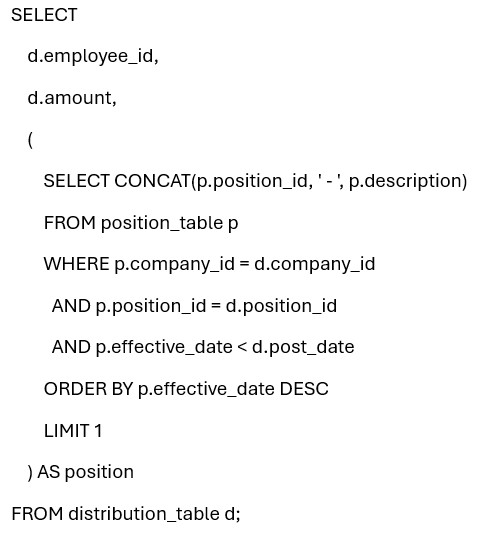
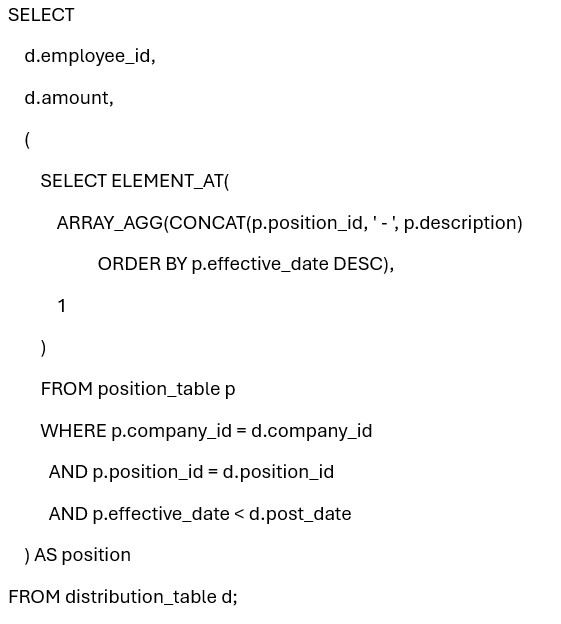
Suppose you want to query an employee distribution table and pull in the employee’s position description from another table. You might be tempted to write something like this:

At first glance, this looks fine: grab the latest effective position for the employee. But in Athena, the ORDER BY … LIMIT 1 construct is not allowed in a subquery.


The Fix: ARRAY_AGG + ELEMENT_AT

The workaround is to use Athena’s ARRAY_AGG function with ordering, then pull out the first element of that array. This replaces LIMIT 1 safely.

Here’s the corrected version:


Why This Works

  • ARRAY_AGG(… ORDER BY …) creates an ordered array of results.
  • ELEMENT_AT(…, 1) extracts the first element, mimicking LIMIT 1.
  • This pattern is fully supported in Athena.

Key Takeaways

  1. Athena doesn’t support LIMIT in scalar subqueries.
  2. Use ARRAY_AGG with an ORDER BY to sort values.
  3. Use ELEMENT_AT to extract the “first” or “top” value you need.
  4. This approach makes your queries both valid and efficient.

Whenever you run into Athena limitations around subqueries, look for array functions. They provide powerful alternatives to constructs that might be second nature in other SQL dialects.

05/29/2026
https://www.nogalis.com/wp-content/uploads/2026/05/Using-the-LIMIT-Keyword-in-Athena-Queries.jpg 470 470 Angeli Menta https://www.nogalis.com/wp-content/uploads/2013/04/logo-with-slogan-good.png Angeli Menta2026-05-29 08:27:222026-05-28 12:35:06Using the “LIMIT” Keyword in Athena Queries

Rethinking Data Risk And Governance In The Age Of AI

News

AI (artificial intelligence) is forcing organizations to rethink something they’ve long treated as background infrastructure: data governance and risk management. In a recent article for Forbes, John M. Bremen – Managing Director and Chief Innovation & Acceleration Officer for WTW – explores how enterprises are re-evaluating data strategy as AI moves deeper into decision-making and operations. A central argument is that data is no longer just an IT asset — it’s a core driver of AI performance. Yet many organizations still struggle with basics like data quality, access, and ownership. Research cited in the article shows that more than half of organizations see data quality and availability as the biggest barrier to successful AI adoption. To address this, the article outlines five key practices. First, companies need to stop treating data as a commodity and instead recognize the complexity behind ownership, regulation, and security. Second, they must understand that not all data is the same — transactional, operational, and analytical data each serve different purposes and carry different risks. Third, organizations should quantify data risk in business terms, not just compliance terms, focusing on how data quality impacts real decisions. Fourth, governance needs to evolve from rigid rules to more dynamic, principle-based models that can keep up with AI systems. And finally, companies should shift from strict data control to data stewardship, focusing on how data is used and what outcomes it enables. The article also breaks down different data types — from transactional and master data to unstructured, synthetic, and real-time streams — emphasizing that each requires its own governance approach. Breman concludes as AI becomes more central to business strategy, strong data governance isn’t optional anymore. It’s the foundation that determines whether AI delivers value or creates risk.


For Full Article, Click Here

05/27/2026
https://www.nogalis.com/wp-content/uploads/2019/11/it-tech-trends-supply-chain.jpg 432 650 Angeli Menta https://www.nogalis.com/wp-content/uploads/2013/04/logo-with-slogan-good.png Angeli Menta2026-05-27 10:28:402026-05-20 13:10:56Rethinking Data Risk And Governance In The Age Of AI

Navigating risk and getting the most out of ERP modernization

News

ERP (enterprise resource planning) modernization in the public sector is turning into a long-term balancing act between innovation, risk, and operational continuity. A recent article from Federal News Network, written by John Heckman, looks at how federal agencies are approaching ERP upgrades — and why these projects are often more difficult than they appear. A major theme is visibility. Many agencies still don’t have a full picture of their IT environments, especially when it comes to “shadow IT” systems that sit outside formal governance. That lack of clarity can become a real problem mid-project, when hidden dependencies suddenly surface and force changes to requirements, timelines, or budgets. Planning also plays a huge role. ERP systems typically stay in place for 15 to 20 years, which means modernization efforts need to start years before an end-of-life date. Agencies have to think in budget cycles, build internal readiness, and coordinate across vendors well in advance — or risk falling behind. The article also emphasizes restraint when it comes to customization. Instead of heavily modifying ERP systems, agencies are encouraged to stick to configuration and use external tools or integrations where needed. This helps keep systems more flexible and easier to maintain over time. Cloud delivery models and embedded AI are also changing the landscape, with SaaS platforms simplifying infrastructure and AI features increasingly handling tasks like reconciliation and prioritization. ERP modernization isn’t just an IT upgrade — it’s a governance and risk management challenge that depends on early planning, strong system visibility, and disciplined decision-making.


For Full Article, Click Here

05/26/2026
https://www.nogalis.com/wp-content/uploads/2025/12/ERP-technology-it-enterprise-business.jpg 280 500 Angeli Menta https://www.nogalis.com/wp-content/uploads/2013/04/logo-with-slogan-good.png Angeli Menta2026-05-26 10:28:392026-05-25 09:13:58Navigating risk and getting the most out of ERP modernization

How to add a user into Lawson Business Intelligence

Articles, Frontpage Article, News

Lawson makes it incredibly simple to add users to its reporting wing LBI.


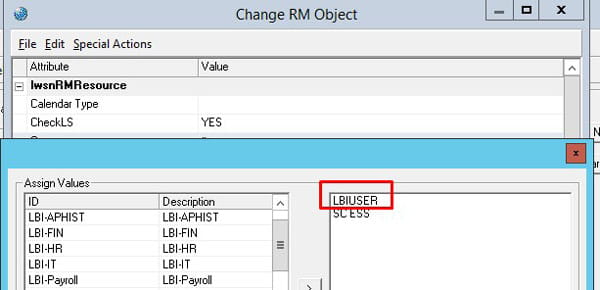
First what you want to do is add the LBIUser GROUP to the user in LSA:

This group may be spelled differently but typically it’s called LBIUSER and is defined when Lawson is first setup for your organization.


Once you add this group to the Lawson user. Make sure you save and clear your server cache.


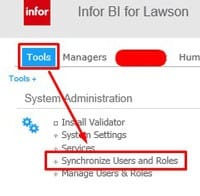
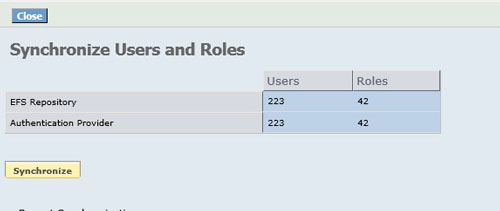
Log in to LBI, go to Tools, and under System Administration click “Synchronize Users and Roles”

LBI typically auto-synchronizes once a day but you can manually do it now and you’ll notice the users and roles will be the same after your sync them.

That’s really it, the user should be able to log in to LBI, though they may not see much if reports, dashboards, and links are tied to additional Lawson groups (or “roles” in LBI). If setting up access, roles, or bursting rights starts to feel like a headache, our team at Nogalis can step in. We handle the technical side of Lawson so your team doesn’t have to wrestle with it. Whether it’s user management, reporting, or troubleshooting, we keep things running in the background so you can stay focused on your day-to-day priorities.

05/22/2026
https://www.nogalis.com/wp-content/uploads/2026/05/How-to-add-a-user-into-Lawson-Business-Intelligence.jpg 470 470 Angeli Menta https://www.nogalis.com/wp-content/uploads/2013/04/logo-with-slogan-good.png Angeli Menta2026-05-22 09:56:022026-05-18 12:59:53How to add a user into Lawson Business Intelligence

Your cloud strategy is incomplete without a cyber recovery plan

News

Cloud adoption has made systems faster and more scalable — but as a recent article by Archana Choudhary – VP at Deutsche Bank and a recognized PM expert in strategy execution- on CIO.com points out, it hasn’t eliminated one of the biggest risks in modern IT: the ability to recover when something goes seriously wrong. Choudhary argues that many organizations mistake cloud migration for resilience. Dashboards may look healthy and security tools may be in place, but that can create a false sense of safety if there’s no real plan for recovering from a full-scale cyberattack. The key shift in mindset is moving from prevention to recovery. Since no system is fully immune to attacks — especially ransomware — the more important question becomes: how quickly can a business recover, and how safely?

The article highlights how modern attacks often target identities and backup systems, not just networks. Misconfigurations, overly broad access, and compromised credentials can allow attackers to move through cloud environments and even corrupt backups before a ransomware event is triggered. That’s why recovery itself becomes a business-critical KPI. Metrics like RTO (recovery time objective) and RPO (recovery point objective) are often treated as technical details, but in reality they define how much downtime and data loss a business can tolerate. A modern cyber recovery strategy, the article argues, needs isolated recovery environments, immutable backups, clean data validation, automated recovery workflows, and regular testing. The bottom line is simple: cloud gives you availability, but not guaranteed resilience. Without a tested cyber recovery plan, even a well-architected cloud environment can still fail when it matters most.


For Full Article, Click Here

05/21/2026
https://www.nogalis.com/wp-content/uploads/2024/04/data-cyber-security.jpg 398 600 Angeli Menta https://www.nogalis.com/wp-content/uploads/2013/04/logo-with-slogan-good.png Angeli Menta2026-05-21 12:12:332026-05-20 12:28:06Your cloud strategy is incomplete without a cyber recovery plan
Page 5 of 232«‹34567›»

LEGACY ERP DATA ARCHIVE SOLUTION


Discover how our clients are leveraging AWS services to archive their Legacy ERP data and provide ubiquitous access to users via a light-weight, secure, and read-only web interface. Secure, Fast, Reliable, and Cost Effective. That is the promise of APIX. Follow the link below to find out more and book a discovery call with our data archive specialist.

BOOK DEMO

© Copyright - Nogalis, Inc. 2024
  • Legal
  • Privacy
  • Contact Us
Scroll to top Scroll to top Scroll to top