

Problem:
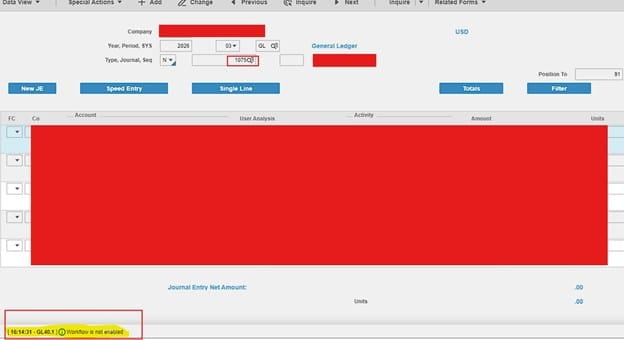
You’re trying to release a Journal Entry on GL40.1 but getting a “Workflow is not enabled” error (see example screenshot below):
Solution:
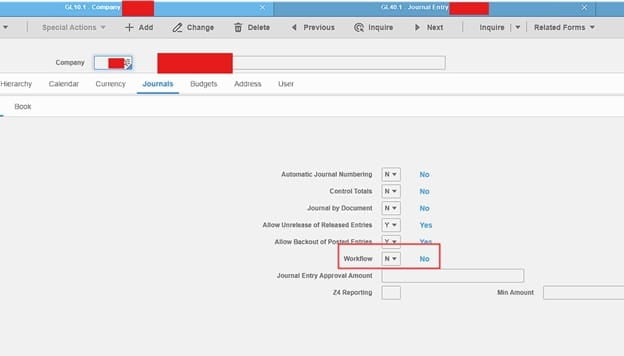
This is a simple resolve. First, on GL10.1, inquire on the company and under the Journals tab, set workflow to No >> Click Change
Go back to GL40.1 and release journal entry. This should remove the error and fix things. You’re done!
NOTE: This issue may happen when your GL10.1 form is a custom form and has customizations for the Workflow field.

If you receive this message when working with Lawson Security Administrator:
“The version of this file is not compatible with the version of Windows you’re running. Check your computer’s system information to see whether you need an x86 (32-bit) or x64 (64-bit) version of the program.”
Corrective action
The LSA tool should be able to run on both 32-bit and 64-bit systems. Take these steps to check to see if this message is related to a different operating system issue.

Modern enterprise resource planning (ERP) transformations promise efficiency—but many organizations are discovering hidden costs after go-live. In a recent ERP Today article published by content director Radhika Ojha, she explains why legacy systems, often left running “just in case,” are quietly undermining those gains. After migrating to platforms like SAP S/4HANA or the cloud, companies frequently keep old systems alive for audits or legal access. These “zombie systems” drive up costs, consume resources, and introduce security risks—especially when they’re no longer patched or actively managed. Instead of delivering savings, they create ongoing technical debt. A smarter approach starts with separating operational data (needed daily) from historical data (kept for compliance). Moving decades of old data into modern systems can slow performance and inflate cloud costs. Tools like Kyano Outboard help by offloading historical data into flexible storage while keeping it accessible for reporting—reducing strain on core systems. Even more impactful is eliminating the need to keep entire legacy applications running. Solutions like Kyano Datafridge allow organizations to retire the application layer entirely while preserving data in secure, compliant, browser-based archives. This ensures auditors and users can still access records without maintaining outdated infrastructure. The payoff is significant. Companies that actively decommission legacy systems can reduce total cost of ownership by up to 80%, while improving security and freeing IT teams to focus on innovation. Ojha’s key takeaway is ERP transformation doesn’t end at go-live. A complete strategy includes a “sunset phase” for legacy systems—ensuring organizations preserve their data history without letting it hold back their future.
Enterprise data strategy is shifting from single platforms to interconnected ecosystems. In his recent Forbes article, Robert Kramer from Moor Insights & Strategy explains that modern enterprises can no longer rely on one centralized system—like traditional enterprise resource planning (ERP) platforms—to manage today’s complex, AI-driven data environments. Historically, enterprise data lived inside tightly integrated ERP systems built for accuracy, auditability and transactional stability. While reliable, these architectures were designed for retrospective reporting and struggled to meet the growing demand for real-time insights. As digital channels, mobile applications and sensor data expanded, organizations adopted distributed processing tools and cloud platforms to handle higher data volume, velocity and variety. But this evolution also introduced new complexity. Multi-cloud environments, overlapping tools and fragmented data pipelines have created operational sprawl. As a result, raw performance is no longer the key differentiator among enterprise data platforms. Instead, the real value lies in the ecosystem surrounding them—how effectively systems integrate, share governance, maintain consistent definitions and enable secure collaboration across environments. Today’s enterprise data platforms act as foundational layers within broader ecosystems that include analytics engines, streaming services, artificial intelligence (AI) tools and governance frameworks. Vendors may offer unified platforms or modular services, but success ultimately depends on how well these components work together. The rise of AI makes this even more critical. As automated systems increasingly influence business decisions, strong governance, lineage tracking and data quality controls must be embedded across the entire ecosystem. Ultimately, Kramer argues that IT leaders must shift their mindset—from choosing a single platform to designing and managing a resilient data ecosystem that can scale, adapt and deliver trusted insights.
Follow these steps to update a user’s DB password via Infor Lawson Cloudsuite

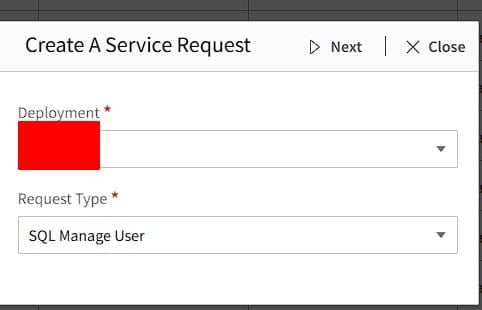
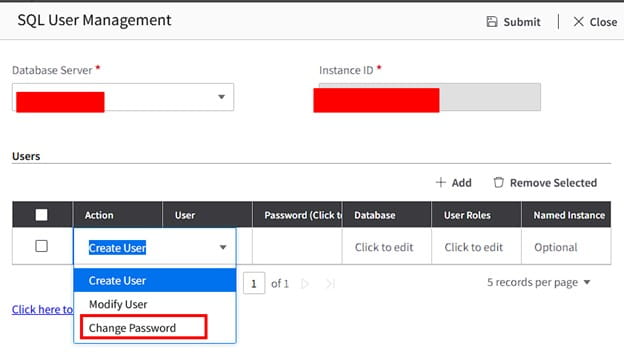
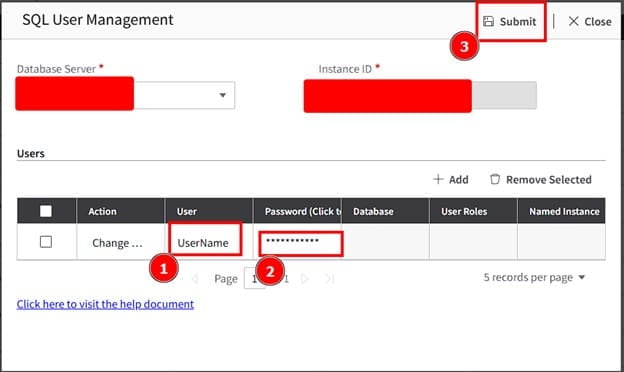
All done! Validate with the user. If this is something you’re need assistance managing, Nogalis offers a team of Lawson specialists within a single MSP services contract for customers. Let us know if we can assist you today.
Enterprise software is undergoing a major transformation as cloud computing reshapes how companies run their operations. In an article published by Slashdot, the publication explains how the ERP (enterprise resource planning) industry evolved—led by its original pioneer, SAP. For decades, ERP systems served as the backbone of corporate IT. Originating from manufacturing resource planning in the 1960s, ERP platforms eventually expanded to manage finance, HR, supply chains, and operations across entire organizations. But traditional ERP was notoriously complex and expensive. Deployments could take years, required dedicated hardware and specialized staff, and upgrades were risky due to heavy customization and tight connections with legacy systems. The rise of cloud computing in the early 2000s began to challenge this model. Software-as-a-service allowed businesses to rent scalable applications instead of running massive on-premise systems. Real-time data sharing, e-commerce growth, and the emergence of AI demanded faster, more flexible software—something traditional ERP struggled to deliver. Early cloud ERP solutions, including those pioneered by NetSuite, helped smaller companies adopt more agile systems. But larger organizations still faced complexity when migrating from legacy platforms. The real shift came when SAP re-engineered its flagship ERP for the cloud. Instead of an all-in-one monolithic system, SAP introduced a cloud-native architecture centered on a lightweight core that orchestrates operations while connecting to specialized applications, services, and third-party tools through APIs. This modular approach delivers several advantages: faster innovation, easier configuration instead of heavy customization, and scalability that works for both small businesses and global enterprises. In effect, ERP is evolving into something broader—a cloud platform that unifies data, applications, and AI across the enterprise. The main takeaway is this: cloud computing didn’t just modernize ERP—it fundamentally redefined it.
When working with MySQL, you might notice something surprising: a query that runs quickly on its own suddenly becomes slow when you try to save the results into a temporary table.
For example, let’s say you run a SELECT query that completes in about two minutes. But when you try to capture those results with:
CREATE TEMPORARY TABLE table_name
SELECT field1, field2, field3;
the process hangs, forcing you to kill it after five minutes. What’s going on here?
Why It Happens
When you run CREATE TEMPORARY TABLE … SELECT, MySQL is actually doing two jobs:
That second step adds overhead. Here are the most common reasons for the slowdown:
Creating a Temporary Table in Memory
If your dataset isn’t too large, you can speed things up by creating the temporary table in memory instead of on disk. MySQL supports this via the MEMORY storage engine:
CREATE TEMPORARY TABLE temp_in_memory (
id INT,
name VARCHAR(255)
) ENGINE=MEMORY;
Then, you can insert data directly into this in-memory structure:
INSERT INTO temp_in_memory
SELECT field1, field2
FROM source_table;
Because the table lives in RAM, inserts and reads are much faster—though the tradeoff is size limits (governed by the max_heap_table_size and tmp_table_size settings).
Best Practices
If you’re seeing big slowdowns when creating temporary tables, try:
Takeaway
A SELECT query that runs fast doesn’t always translate to a fast CREATE TEMPORARY TABLE. The extra overhead of creating and writing the table can introduce new bottlenecks. If you only need the results for lightweight, session-specific work, an in-memory temporary table (ENGINE=MEMORY) can be a game-changer.
By understanding how MySQL handles temporary tables under the hood, you can choose the right approach and keep your queries moving fast.

Key Questions Every Organization Should Ask Before Choosing a Lawson Data Archive Platform
Retiring a legacy Lawson system can significantly reduce infrastructure costs and eliminate the burden of maintaining aging ERP servers. However, once Lawson is retired, the archive platform becomes the long-term system of record for historical financial and operational data.
Before selecting a solution, organizations should verify the following areas.
☐ Does the platform support encryption at rest and in transit?
☐ Does it integrate with your existing identity provider (SSO/SAML)?
☐ Are role-based permissions available to control user access?
☐ Does the system maintain detailed audit logs of all user activity?
☐ Has the vendor undergone SOC 2 or equivalent security assessments?
☐ Can administrators manage user access policies centrally?
☐ Has the solution been tested with full production-scale Lawson datasets?
☐ Can it handle 10+ years of transactional history without performance issues?
☐ Are query results returned quickly even with billions of records?
☐ Is the architecture designed to scale as data volumes grow over time?
☐ Does the platform support detailed queries across major Lawson modules?
Examples include:
☐ General Ledger (GL)
☐ Accounts Payable (AP)
☐ Vendor Records
☐ Payroll History
☐ Procurement Data
☐ Transaction Distributions
☐ Can users access transaction-level detail, not just summary reports?
☐ Are query screens designed to mirror familiar Lawson workflows?
☐ Does the architecture eliminate the need to maintain legacy Lawson servers?
☐ Is the platform built on modern cloud infrastructure?
☐ Does the vendor have a clear long-term roadmap for the product?
☐ Will the platform remain viable for 10–20 years of data retention?
☐ Can auditors retrieve historical transactions quickly and easily?
☐ Are access logs and user activity recorded for compliance reviews?
☐ Can organizations demonstrate clear data stewardship and governance?
☐ Does the platform support internal and external audit processes?
Final Consideration
Retiring Lawson is often a once-in-a-decade decision. The archive platform selected will become the system your organization relies on to access historical financial and operational data for years to come.
Ensuring the platform meets the requirements above helps protect your organization from costly surprises after the legacy ERP has been retired.
Save this checklist and follow this guide before choosing a Lawson Archive Platform: