844-NOGALIS (844-664-2547)
Nogalis, Inc.
  • Link to Facebook
  • Link to X
  • Link to LinkedIn
  • Link to Mail
  • Company
    • News, Events and Articles
    • About Us
  • Products
    • Infor Lawson Data Archive
    • PeopleSoft Data Archive
    • Oracle Data Archive
  • Services
    • Infor Lawson Support
    • Infor Lawson / CloudSuite Consulting
  • Education & Training
  • Support
  • Contact Us
  • Click to open the search input field Click to open the search input field Search
  • Menu Menu

Archive for category: Frontpage Article

You are here: Home1 / News, Events and Articles2 / Frontpage Article

Landmark Application Configuration Overview

Articles, Frontpage Article, News

The Landmark Configuration Console allows you to effect system-wide changes with no downtime for your users.  You can personalize your Landmark applications in a multitude of ways:

  • Add custom fields
  • Move fields or remove them from forms
  • Set fields to required
  • Modify list columns (add/remove/rearrange)
  • Create new
    • User interfaces (pages, lists, etc)
    • Business classes (data, objects, etc)
  • Security
    • Use the Security Configuration tool to modify security classes, rules, and roles
  • Web Services
    • External systems communication with Landmark business classes using SOAP, HTTP, WSDL, or REST

The Infor-delivered role what will allow users to access Configuration Console is GlobalUIConfigAccess_ST.  The role that will allow users to access Security Configuration is SecurityConfigAccess_ST.
12/27/2019
https://www.nogalis.com/wp-content/uploads/2019/12/Landmark-Application-Configuration-Overview.jpg 470 470 Angeli Menta https://www.nogalis.com/wp-content/uploads/2013/04/logo-with-slogan-good.png Angeli Menta2019-12-27 07:33:012019-12-24 10:37:32Landmark Application Configuration Overview

Use IPA FTP Node to Transfer Multiple Files

Articles, Frontpage Article, News

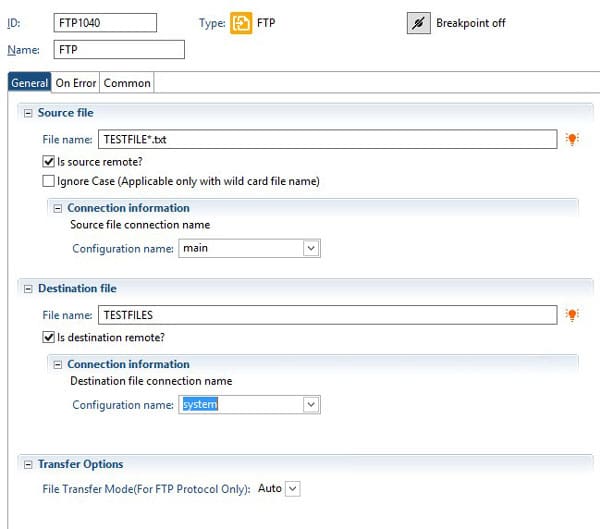
When you are using IPA to transfer files, there may be some cases where you need to pick up multiple files, or where you need to get files for which you only know a partial name (such as a file that contains a date/timestamp).  To get multiple or masked files, you can supply an asterisk (*) in the filename as a wildcard.  Then, the destination file should actually be a directory name (of a directory that exists).  All files that are picked up in the FTP process will be placed in that directory, and you can use them from there.


12/26/2019
https://www.nogalis.com/wp-content/uploads/2019/12/Use-IPA-FTP-Node-to-Transfer-Multiple-Files.jpg 470 470 Angeli Menta https://www.nogalis.com/wp-content/uploads/2013/04/logo-with-slogan-good.png Angeli Menta2019-12-26 08:22:342019-12-24 10:32:36Use IPA FTP Node to Transfer Multiple Files

Get Database Relationships from GEN

Articles, Frontpage Article, News

The Lawson database relationships are stored in the GEN database.  Foreign key constraints are not actually added to the database tables.  So, to see what these relationships are, you can query the GEN data.  The primary relationship information is stored in FILEREL.  Then, to get the fields that are used in the relationship you’ll need to join FILRELFLD and FILEINDFLD.  FILERELFLD contains the primary field names, and FILEINDFLD contains the foreign field names.  The below query is a sample run against a SQL Server database for a data area called “TEST”.


SELECT RTRIM(FILEREL.FILENAME) PARENT_FILE,

RTRIM(FILEREL.RELFILE) CHILD_FILE,

REPLACE(RTRIM(FILERELFLD.FRFLDNAME), ‘-‘, ‘_’) PARENT_FIELD,

REPLACE(RTRIM(FILEINDFLD.FLDNAME), ‘-‘, ‘_’) CHILD_FIELD

FROM FILEREL INNER JOIN

FILERELFLD ON FILERELFLD.FILENAME = FILEREL.FILENAME AND

FILERELFLD.RELNAME = FILEREL.RELNAME INNER JOIN

FILEINDFLD ON FILEINDFLD.FILENAME = FILEREL.RELNAME AND

FILEINDFLD.INDEXNAME = FILEREL.INDEXNAME AND

FILEINDFLD.FLDNBR = FILERELFLD.FLDNBR INNER JOIN

FILEDEF ON FILEDEF.FILENAME = FILEREL.FILENAME

WHERE FILERELFLD.FRFLDNAME <> ‘              ‘ AND

FILEREL.PRODUCTLINE = ‘TEST’


12/24/2019
https://www.nogalis.com/wp-content/uploads/2019/12/Get-Database-Relationships-from-GEN.jpg 470 470 Angeli Menta https://www.nogalis.com/wp-content/uploads/2013/04/logo-with-slogan-good.png Angeli Menta2019-12-24 10:09:162019-12-24 10:11:31Get Database Relationships from GEN

Downloading Logs for review in a Lawson Cloud Environment

Articles, Frontpage Article, News

In Lawson v10, Admin users would have direct access to system logs but in the cloud, you’re access is limited to FTP access.

Problem: Reviewing IOS and LADB logs live is more difficult through FTP since you’re unable to download or view a file that is currently being written to. To get around this you simply use the copy line command or cp.


To understand this process, follow the steps below:

Step 1: Open LID and connect to the Lawson environment you want to access logs from.


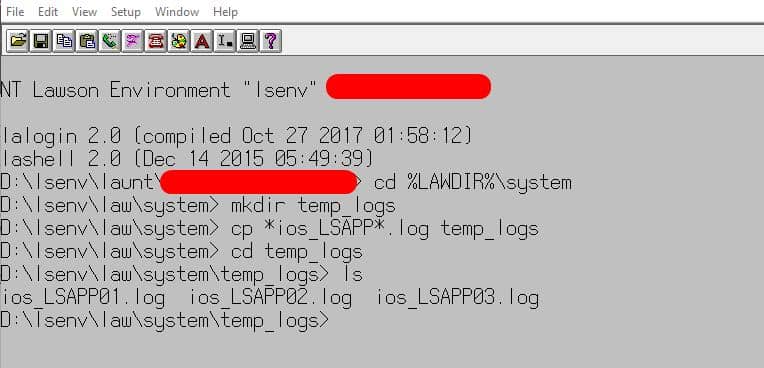
Step 2: Go to %LAWDIR%\system directory


Step 3: Create a new folder in %LAWDIR%\system directory, command is: mkdir temp_logs (this will create a folder called temp_logs)


Step 4: In %LAWDIR%\system type this command (change based on your log names):

cp *ios_lsapp*.log temp_logs


Step 5: Go to %LAWDIR%\system\temp_logs and run the ls command to view your copied log files or simply download them from the FTP.


Here is a screenshot of my results:

12/23/2019
https://www.nogalis.com/wp-content/uploads/2019/12/Downloading-Logs-for-review-in-a-Lawson-Cloud-Environment.jpg 470 470 Angeli Menta https://www.nogalis.com/wp-content/uploads/2013/04/logo-with-slogan-good.png Angeli Menta2019-12-23 09:09:372019-12-19 10:07:18Downloading Logs for review in a Lawson Cloud Environment

Preparing for Lawson Year-End Regulatory Patching

Events, Frontpage Article, News, Webinars

It’s that time of year again! Infor has released the regulatory patching for Lawson. Patching affects 1099 reporting, benefits/ACA, and payroll. We have compiled some tips to help make your year-end patching experience as smooth as possible.


12/20/2019
https://www.nogalis.com/wp-content/uploads/2019/12/Preparing-for-Lawson-Year-End-Regulatory-Patching-min.jpg 470 470 Angeli Menta https://www.nogalis.com/wp-content/uploads/2013/04/logo-with-slogan-good.png Angeli Menta2019-12-20 11:09:052022-04-27 11:03:35Preparing for Lawson Year-End Regulatory Patching

IP Designer Series – JSON Parser

Articles, Frontpage Article, News

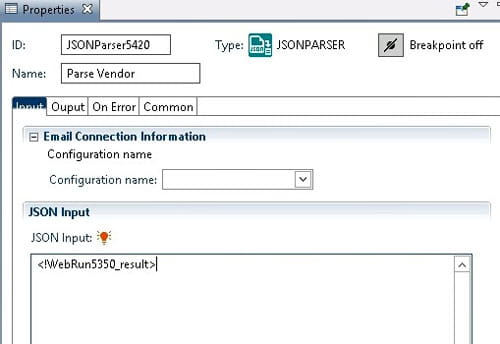
This node is used to parse a JSON response from a file or a web service call.  The input can be any JSON text, such as the result from a web service call or output from a file.

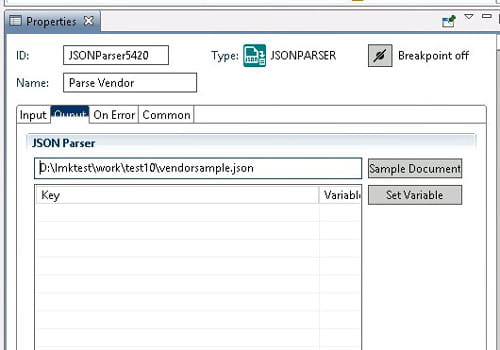
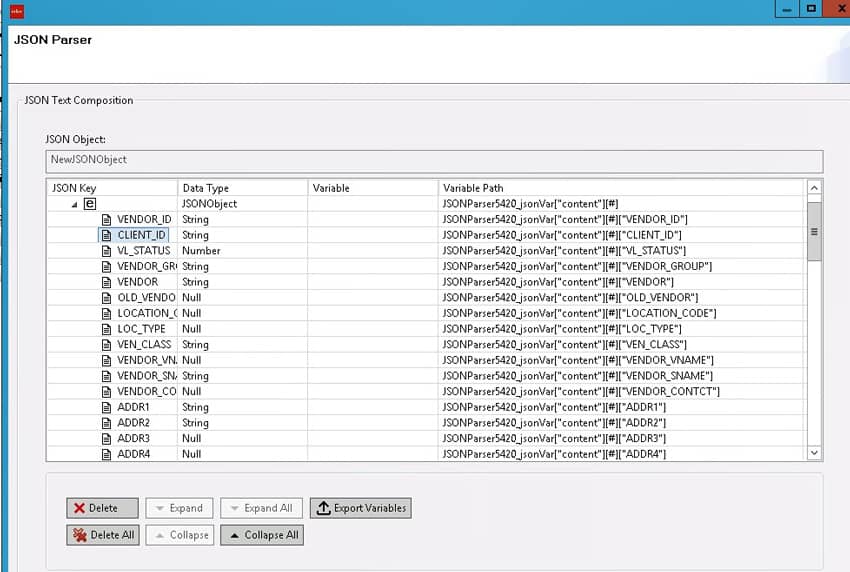
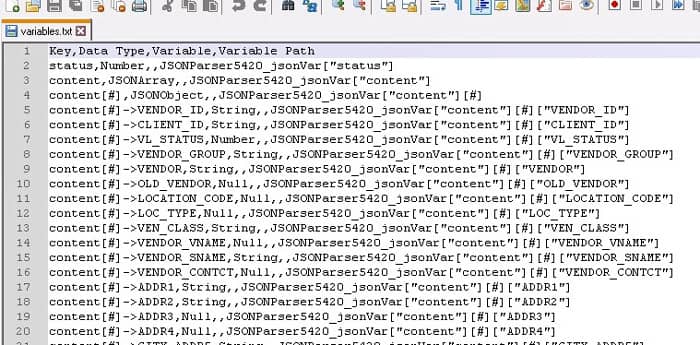
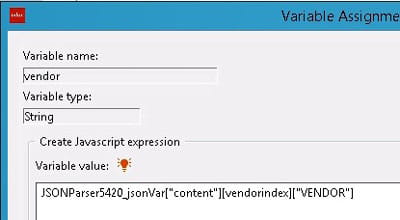
On the output tab, you can select a sample document that will help building the variable list.  When you click “Set Variable”, you can see all the variables that are available from the sample document, and you can export those variables so that they can be copy and pasted in assign nodes.

12/20/2019
https://www.nogalis.com/wp-content/uploads/2019/12/IP-Designer-Series-JSON-Parser.jpg 470 470 Angeli Menta https://www.nogalis.com/wp-content/uploads/2013/04/logo-with-slogan-good.png Angeli Menta2019-12-20 08:09:252019-12-20 11:12:53IP Designer Series – JSON Parser

AWS Lambda Environment Variables

Articles, Frontpage Article, News

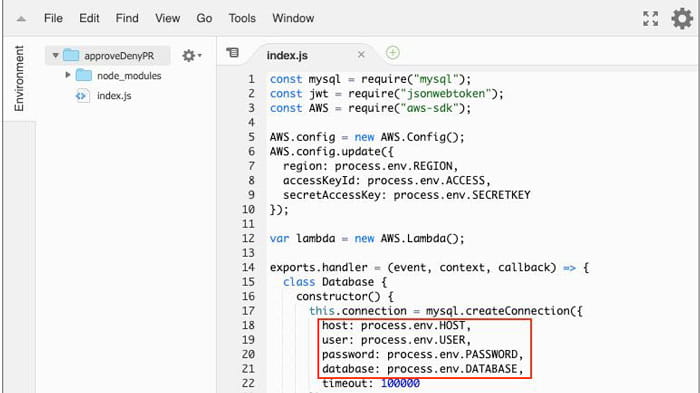
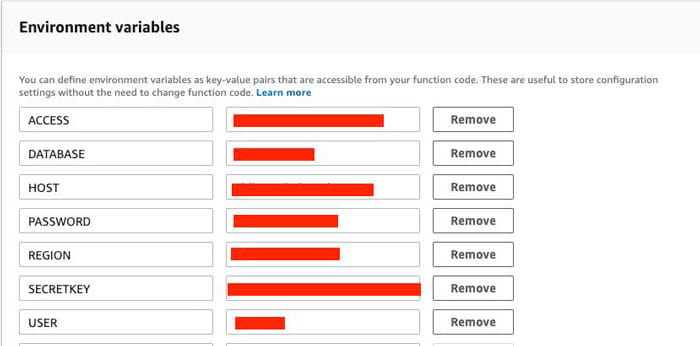
When setting up a lambda function there will most likely be secure information that you don’t want to put into your lambda functions. This is when you want to use environment variables. When declaring environment variables inside the code of your lambda function, add the string “process.env.varable_name” where “variable_name” is any string. Once you’ve declared all your environmental variables, go to your was lambda  function console, and scroll down to the environment variables section. Then add all your “variable_names” to the left side text boxes and on the right enter in the actual value of the variable. You can then, if needed, encrypt the environment variables by using the encryption configuration.

12/18/2019
https://www.nogalis.com/wp-content/uploads/2019/12/AWS-Lambda-Environment-Variables.jpg 470 470 Angeli Menta https://www.nogalis.com/wp-content/uploads/2013/04/logo-with-slogan-good.png Angeli Menta2019-12-18 08:13:062019-12-17 09:28:37AWS Lambda Environment Variables

AWS SES Template Creation

Articles, Frontpage Article, News

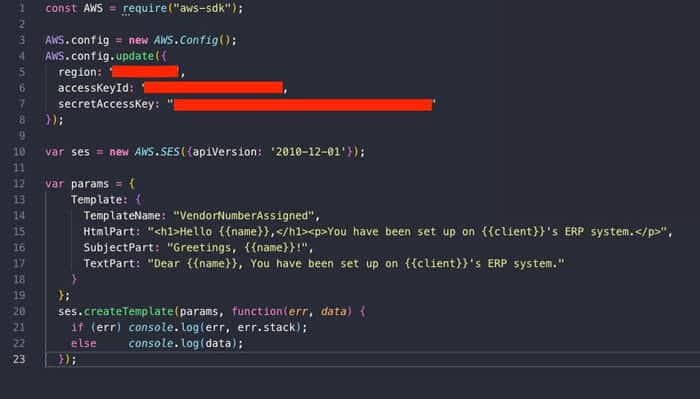
AWS has SES (Simple Email Service) which is used to help developers create notification emails. In order to use this feature, you must create a template for an email and then you can send emails. Currently, there is no way to create a template in the AWS console. One of the ways to create one is by using a Node script. You first need to have:

  1. Node installed on your computer
  2. An AWS account with access & secret keys

You will want to enter your account information where the red highlights are. Then you must add a template name (name you will be using when calling template), htmlPart (text in the email in html form), subject (the greetings), and text part (The email body that will be visible to recipients whose email clients do not display HTML).


Run the script and check if your template is in your AWS SES dashboard.

12/13/2019
https://www.nogalis.com/wp-content/uploads/2019/12/AWS-SES-Template-Creation-min.jpg 470 470 Angeli Menta https://www.nogalis.com/wp-content/uploads/2013/04/logo-with-slogan-good.png Angeli Menta2019-12-13 08:18:142019-12-12 12:44:24AWS SES Template Creation

AWS Lambda and API Gateway

Articles, Frontpage Article, News

The following instructions are given that you have a lambda function created that works. AWS has API Gateway which enables developers to create RESTful API endpoints so people can call it and in turn run a lambda function. If you have never set up an API in API Gateway, you must:

  1. Log into the AWS console
  2. Search for “API Gateway” in the services tab
  3. Press “Create API”
  4. Choose REST / New API / assign a name to your api
  5. Once Created, add a resource to you api
  6. Create a method
  7. Add the created lambda function to the api resource

Once you have followed these steps the API Gateway will give you a url where you can call from your code and it will run your lambda function. One last thing you must do is to deploy the API. To do this, go to the resources tab of the API and click the Actions button and then click “Deploy”. Note that you may need to set up CORS if you want to secure your API.

12/11/2019
https://www.nogalis.com/wp-content/uploads/2019/12/AWS-Lambda-and-API-Gateway.jpg 470 470 Angeli Menta https://www.nogalis.com/wp-content/uploads/2013/04/logo-with-slogan-good.png Angeli Menta2019-12-11 08:57:122019-12-10 13:04:47AWS Lambda and API Gateway

Private Variables in Javascript

Articles, Frontpage Article, News

If you are writing code and you want a user to manipulate data using methods you create but also don’t want the user to be able to manipulate data directly. One way you can go about this is through functional programming. Say you want to have an object that has the ability to move right and left with a starting position at 0. You might build out something like this:

const walker = {
    position = 0,
    right: function() {
        this.position++
    },
    left: function() {
        this.position–
    }
}

Then you call the function, walker.right() to move right and walker.left() to move left. However the way this is set up, a person can redefine the position variable by just directly changing it I.e. walker.position = 20. This is not good because the walker will be teleporting without ever hitting positions 1-19. So how do you stop a user from directly changing a variable that you don’t want them to change. An easy way to make this a private variable, is to make a function that return an object with only the method you want them to use. For example:

function walker() {
    let position = 0,
    return {
        right: function() {
            this.position++
        },
        left: function() {
            this.position–
        }
    }
}

const ben = walker()
ben.right()

I made a new variable called “ben” from the walker function. The way this is set up a user can no longer directly change the position property.

12/09/2019
https://www.nogalis.com/wp-content/uploads/2019/12/Private-Variables-in-Javascript.jpg 470 470 Angeli Menta https://www.nogalis.com/wp-content/uploads/2013/04/logo-with-slogan-good.png Angeli Menta2019-12-09 07:17:032019-12-06 13:40:08Private Variables in Javascript
Page 94 of 106«‹9293949596›»

LEGACY ERP DATA ARCHIVE SOLUTION


Discover how our clients are leveraging AWS services to archive their Legacy ERP data and provide ubiquitous access to users via a light-weight, secure, and read-only web interface. Secure, Fast, Reliable, and Cost Effective. That is the promise of APIX. Follow the link below to find out more and book a discovery call with our data archive specialist.

BOOK DEMO

© Copyright - Nogalis, Inc. 2024
  • Legal
  • Privacy
  • Contact Us
Scroll to top Scroll to top Scroll to top