


Infor recently announced that dairy processor Cremo SA has selected Infor CloudSuite Food & Beverage to optimize its processes and ensure product quality is always up to meet the highest standards. Per the press release, Cremo needed to meet customer requirements and guarantee the flow of information within the company, thus a secure and powerful IT infrastructure was required. The previously used enterprise resource planning (ERP) system no longer met the requirements in terms of process optimization and product quality. Infor CloudSuite Food & Beverage, specifically tailored to the needs of the food and beverage industry, provides unique capabilities for dairies. In addition, Infor’s public cloud strategy can help Cremo adopt best practices and capabilities that have proved itself at many food and beverage manufacturers and, more specifically, dairy processors. The solution also meets the industry’s expectations of innovation, traceability, regulatory requirements, margin pressure and transaction speed. The scalability and security of the multi-tenant industry cloud platform powered by Amazon Web Services (AWS) were further reasons that made Infor the right choice. Moreover, to ensure the success of this project, Cremo and Infor identified the relevant value drivers and held workshops with the process owners at Cremo to understand their way of working. This made it possible to evaluate the level of coverage of Infor CloudSuite Food & Beverage.

If you have added environment users in Lawson, and you are not seeing the new users in listusermap, there’s an easy fix for that.
You will need to run it with the command -a. This will refresh the cache and show all users in NT order.
listusermap -a
If you would like to run other commands, here are some other tips for the listusermap usage:
-a – list all users,
-c – list from cache (Default),
-n – clean up cache,
-u – find user,
-p – find account,
-h – find historical user (NTxxxxxxxx),
-o – show historical user names in list,
-k – list archived user cache

Infor recently announced that El Florido supermarket chain has chosen Infor WMS (Warehouse Management System) solution to optimize its operating times throughout the supply chain. The solution will be implemented by Infor partner Cerca Technology. Per the press release, El Florido’s constant growth required a leading solution to digitize all processes for supply, demand planning, storage, and the delivery of orders. Infor WMS provides real-time information, helping El Florido measure processes and productivity accurately, centralize procedures, and provide greater flexibility in the planning and attention of orders from its customers. The implementation of Infor WMS is only the first step of the digital transformation to reach the performance and processes that are required and integrate a system that supports transportation management. Moreover, Alejandro Luna, country manager of Infor Mexico, explains, “Infor WMS will benefit the activities of the distribution centers of El Florido in an integral way. This solution combines warehouse assortment with integrated labor management and analytics to reduce complexity and enable optimized operational execution. Infor WMS is a state-of-the-art, best-in-class warehouse operations solution around the world, designed with ease of setup and intuitive use in mind.”


To gain access to Infor Reporting to create and edit reports, you’ll need to make sure your organization first has the license for the software. Consult with Infor before moving forward.
Example of Infor Reporting Icon:
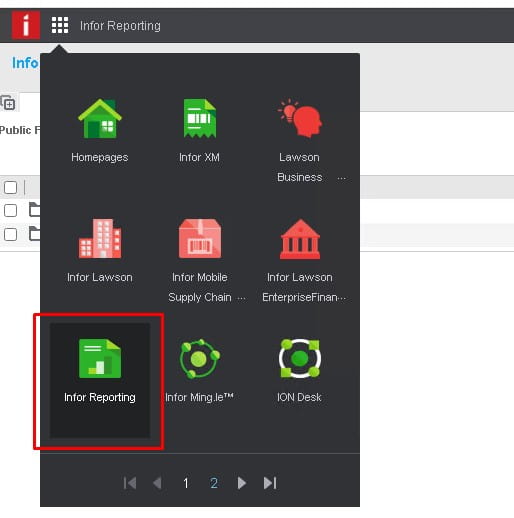
The above screenshot shows how a user may gain access to view Infor Reporting Reports. These can be reports that show Expense Reports, User Proxies, etc.
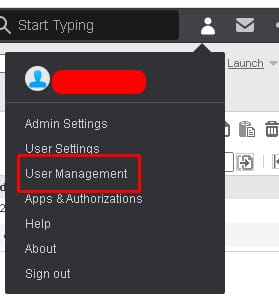
To gain access to the administration tools, you’ll need to assign these two roles:
XM-AdvancedBusinessAuthor – Allows access to canned templates (example reports to build off of)
XM-ProfessionalAuthor – Allows freeform access to create new and edit existing reports.
These roles must be assigned in Mingle under user management tab
Good luck!

Growth is a critical part of every business. To stay on top of the current landscape, innovation is key. Especially when an acquisition happens, there are decisions that need to be made regarding data integration. “The ability to store, manage, control and replicate data between the mainframe, on-premise software, and public cloud platforms in real time will allow businesses to tap into innovation—even during an acquisition,” says Milan Shetti, CEO, Rocket Software. Additionally, in an article on CIO.com Shetti shares how to manage data integration effectively during and acquisition to better manager and leverage your organization’s data.
Data synergy
“Organizations need to integrate on-premises systems, like mainframes, with cloud platforms to best manage influxes of data and stay ahead of the curve amongst competitors. With a wide range of varying data, the ability to leverage the reliability, data integrity, and scalability of the mainframe with the accessibility and collaborative benefits of the cloud is the best solution for overall data visibility and control. For this to be possible, data integration tools must also allow access to and replicate data from intricate mainframes, preserving the value of historical data. Implementing hybrid-cloud solutions also dismantles data silos that have plagued businesses for years.”
Data synchronization
“Implementing real-time synchronization capabilities into business’s storage systems is crucial to ensure that data reflects their operational realities within a rapidly changing economic landscape. Without real-time updates, IT teams could run the risk of making misinformed decisions based on outdated data, which can cost the business money. With real-time data syncing, data integration tools can run historical, on-premises data for cloud-based AI and ML analytics, which are especially important datasets that are often not utilized, especially when a company is dealing with competing priorities in an acquisition. The use of AI will only continue to rise, making this capability crucial for decision-making.”
Software development
“Software development is another crucial reason why well-managed and up-to-date data is crucial. This is especially true for quality assurance (QA) testing of companies’ applications. When organizations leverage DevOps practices in their software development processes, testing applications in isolated environments is no longer sufficient. Teams must integrate up-to-date data into the testing process to replicate real-world scenarios, which ensures that software functions as expected under various conditions. Using realistic data sets during testing allows teams to validate application performance, security, and user experience more effectively. It also enables proactive issue identification, leading to faster bug detection, reduced development time, and an overall enhancement of application performance.”

Artificial Intelligence (AI) is here and it will continue to reshape the world we live in. Bernard Marr, strategic business & technology advisor, shares an article on Forbes on the top 5 AI trends we can expect to make waves in 2024 and beyond.