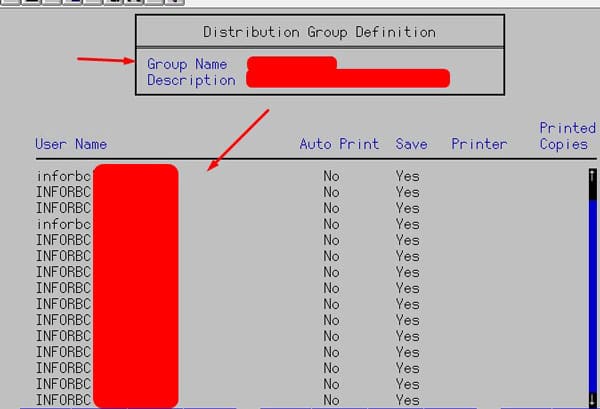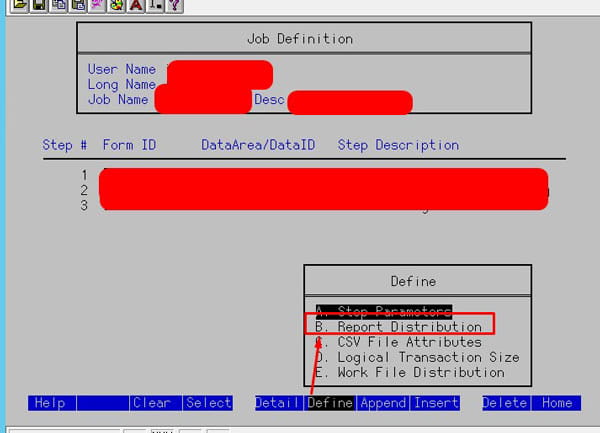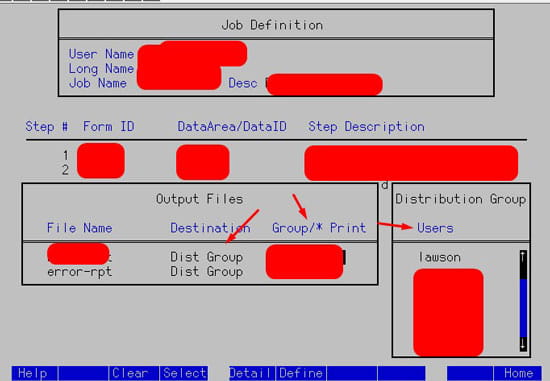

These are instructions for copying user jobs (by user) between environments.  This will NOT allow you to copy jobs between environments on different versions of LSF of Lawson applications if the job parameters have changed between versions.

  1. Run listusermap in both environments and make note of the NTID for the user in each environment
  2. In the source environment, run the command
jobdump –d –o job –v UserName “DOMAIN\UserName” outputfile
  1. Open the output file created by the command in a text editor
    1. Update any references to the NTID from the source system with the NTID of the destination system
    2. Make any directory structure changes as needed (i.e. change “D:\lsfprod to D:\lsftest”)
  2. Copy the output file to the destination system
  3. In the destination environment, run the command
jobload –c –o job inputfile


More on jobdump/jobload


Problem:

You are having this issue: I’m getting a reorg error when trying to Activate a CTP

“ERROR – Reorg control file ‘D:/lawson/db/APPS10/reorg.cntl’ exists.  It appears the database is in the midst of a reorganization.  Please complete before Activating.”


Resolution:

Follow these steps to resolve the error.

  1. In LID, run this command: dbreorg -d <Enter_Your_Productline_Here>
  2. Once it completes, run the lawappinstall again:
    1. perl %GENDIR%/bin/lawappinstall activate <productline>
  3. After this, run the verifymsf2000 to validate the dbdict and database are in sync:
    1. %gendir%/bin/Verifymsf2000 -u <your_lawson_user> -p <your_lawson_password> <your_productline>

This usually occurs when a reorg wasn’t completed previously on another CTP. Good luck!

Below is a useful tip for using the field prefix to search for a column in SQL

Clicking Ctrl+Shift+O in a field on a screen in Lawson is a useful tool to determine what database file that field is populated by.  This can be used in Lawson DME Queries, but it also can be used in SQL queries.  The prefix of the field name (such as VEN) maps to the table name where the value comes from.  If you don’t know how the prefix maps to a table, you can easily find this information in the GEN database.  The table you want to search is FILEDEF on the PREFIX column.  So, your query might look something like this:

SELECT * FROM FILEDEF WHERE PREFIX = ‘VEN’

This will return the record that contains table name and other information about the database file that populates this screen.

To find out your EMSS (Employee and Manager Self-Service) version, please run the following command in LID (Lawson Interface Desktop):

 rngdbdump logan version | lashow

The command rngdbdump logan version | lashow is used to get the EMSS version. This command is designed for Lawson environments. In a Lawson environment with LID is intended to extract version information from the logan database file, and display the extracted version information.

When you run the command, you will get a screen similar to the one shown below. There, you can look up your EMSS version on your Lawson environment.

Problem
We need to make a change in TEST to AP10 custom form.


Next steps:

Backup the existing AP10 custom file and copy the new version, ap10.1.custom.xml  file to Prod  F:\lawson\law\persistdata\lawson\portal\content\forms
There is no impact to users and no outage required.
After the change is in place, AP10 users will need to clear their browser cache and cookies and an IOSCacheRefresh will need to be run to clear the DS from Portal.

  1. Open DS and Go to the existing tab
  2. Go to UI Designer,


  1. click on Find, The top one which is custom is the one we want to view. Select and Open


  1. Now go to browser tab and duplicate the tab to open a new window


  1. Create a new UI Designer. Select and hit ok


  1. Go to Next
  2. Create a new form in the Productline in AP System


  1. Click next and give it a second to load. Find AP10 and NEXT
  2. And Finish


  1. Go to source at the bottom
  2. Scroll all the way to the top to see if it is different

  1. Shows it is a different version
  2. Go back to design tab
  3. Place browser side by side to work with both

The ap10.1 reviewed is the customization

  1. Go to source on bottom tab and copy that into notepad++ and do the same thing with the other one.

  2. Go to plugins

Look for compare and check it and click install

Then go back to plugins admin/compare and

Compare/compare

  1. If that is not helpful, they may have had something in there that they have since commented out.

Just add the export button to a fresh form and overwrite the old one.

  1. Go to the script on the right had window
  2. Double click on the button label and drag it to position.

  3. Click on Text button

Type export

  1. Click on Action

This tells you want you want it to do, so go to the other screen and copy what that one has

  1. Just add export vendors

Since they have old code, we don’t need the other one

  1. Now go to script to add lines to make it work
  2. Copy the function that is needed
  3. Paste it in the new screen
  4. backup original file in the LAWDIR/persisdata/lawson/portal/content/forms folder

  5. Save the script that was modified

  6. Go to view and preview on tool bar
  7. Validate if it now works.
  8. Migrate to PROD by copying the xml file to PROD.
  9. Clear browser data and Refresh cache so users can now see the updated version.


In Lawson v10, Admin users would have direct access to system logs but in the cloud, you’re access is limited to FTP access.

Problem: Reviewing IOS and LADB logs live is more difficult through FTP since you’re unable to download or view a file that is currently being written to. To get around this you simply use the copy line command or cp.


To understand this process, follow the steps below:

Step 1: Open LID and connect to the Lawson environment you want to access logs from.


Step 2: Go to %LAWDIR%\system directory


Step 3: Create a new folder in %LAWDIR%\system directory, command is: mkdir temp_logs (this will create a folder called temp_logs)


Step 4: In %LAWDIR%\system type this command (change based on your log names):

cp *ios_lsapp*.log temp_logs


Step 5: Go to %LAWDIR%\system\temp_logs and run the ls command to view your copied log files or simply download them from the FTP.


Here is a screenshot of my results:

If you found this article helpful, Nogalis offers expert technical resources for managing Lawson Cloud environments. Whether you’re dealing with FTP restrictions or need assistance with accessing logs, our team is here to provide guidance and support. Contact us to learn more about how we can assist with your Lawson system needs.

BSI Support has asked for a BSI Display Log.  Use this method to configure your system to create the logs.

Open msgmnt and enter your Product Line and enter Category ‘PRTFX’.

Look in the Number column to see if the Number 400 appears.  If there is not a message 400, you will need to add it.

You can either Tab or Down Arrow to get to a position to enter the 400 line.

Use the F8 key to Insert a line.

Type 400 in the Number column.

Type Y in the Xlate column.

Within the Message portion, type in the fix for the message

After pressing Enter twice, the 400 message will appear in the appropriate order and has been added to the listing.

Now go to PR80, create a payment and Calculate

After the PR80 has been successfully calculated, click on Options > Display Log File


The Display Log will appears in a new text editor.  Save the file as ‘BSIDisplayLog’ and send the file to BSI.