Two of the most important tools you can have in place for your business are enterprise resource planning (ERP) and customer relationship management (CRM) systems. Sometimes ERP and CRM become synonymous or are referred to as a bundled singular system While they are separate business processes, it is a great advantage to have both systems in place, and working together. Alana Rudder and Rob Watts share an informative article on Forbes comparing both these business processes, and how you can utilize them both for your business.

At its core, Rudder and Watts explain, an ERP system serves as a central database to integrate and facilitate automations and efficient resource allocation—including funding—between company functions. In contrast, a CRM gives companies the tools and capabilities to build and maintain positive relationships with key stakeholders. ERP help companies manage their finances and resources to control costs and meet company production goals. CRMs help companies manage the sales cycle and customer experience. Both ERP and CRM systems offer cloud-based databases to ensure users can access accurate, real-time data from anywhere and from any device. They both collect data, but for different reasons – ERP collects data from systems across the business to create one source of data truth, while CRM collects data on leads, prospects and customers to create a complete view of their preferences, needs and interaction and purchase history. Additionally, the article points out that while ERP systems allow for integrations to manage sales cycles, marketing, customer service and the compilation of complete customer views, these processes are better handled by CRMs. However, when it comes to managing manufacturing processes, resource planning and allocation, financial management, supply chains and production, an ERP is a better solution. A real competitive edge can be accomplished by integrating the two solutions.

Sales Management. “Both ERP and CRM solutions have unique features that can lend to more closed sales. A CRM offers tools to help sales representatives determine if prospects or leads are likely to buy, reach out to “hot” leads, personalize interactions to uniquely meet the needs of existing and potential customers and, ultimately, close sales. An ERP can lend to smooth sales closing processes by ensuring products are produced and available to meet demand. In doing so, it ensures sales representatives have products available to sell when customers want them. Such capabilities include demand forecasting, resource planning and procurement and automations to speed up production.”

Supply Chain Management. “An ERP system is the stronger solution for supply chain management. Many offer tools to manage the entire production process, from resource procurement and planning and supply chain management to the manufacturing process. However, a CRM offers the tools to make supply chain management worth the investment, including via marketing, sales and customer service management. Together, ERP and CRM solutions offer companies the whole spectrum, from investment in and the use of raw materials to the sale of final product outputs.”

Customer Experience. “Creating a positive customer experience is better left to a CRM solution. Companies can lean on the solution to make personalized sales that induce fewer complaints, then offer follow-up support, quick customer complaint resolutions and personalized upsells that further prompt a positive customer experience. However, the customer experience is often poor if supply chain and manufacturing processes are not on point. An ERP system helps companies manufacture products while correctly balancing quality and cost. This, combined with its demand forecasting, allows sales representatives to offer the products customers want, when they want them and at the right price, thereby inducing fewer complaints and higher customer satisfaction.”

Deciding whether or not your business needs an ERP or CRM system, or bother comes down to the primary needs and goals of your company. While having one over the other has its own advantages, you may find that you will need both systems and will need them to work together to gain a competitive advantage.


 

For Full Article, Click Here

PROBLEM

When I run CB187 job, I found an error message at CB N-68 as per below:

I am not able to delete CB entry with error message “cannot delete non-GL journal entries”. Should I go ahead and post the CB or is there any way I can delete the entry?


RESOLUTION

The message that you cannot delete a non-GL journal is a system enforced error. If the issue results in GL substituting error suspense, a sequenced journal will be created.

Otherwise after it is posted, you could copy with reversing entries to create a new journal with exact opposite data so the two ultimately net to zero.

Or if you simply need to reallocate an entry, a manual entry could be created to “fix” the data.

Infor recently announced that premium hotel operator Elite Hotels of Sweden has begun a project to standardize operations on Infor Hospitality Management Solution (HMS) and Infor Sales & Catering System (SCS), replacing a legacy system unable to offer the integrated and holistic data needed for the hotel group. Per the press release, Infor was chosen based on the ability of the cloud-based platforms that will ensure Elite Hotels of Sweden remains on the most up-to-date functionality was also a vital consideration. Ronny Röe, chief information officer at Elite Hotels of Sweden, said of the new solution, “Infor Sales & Catering will help us deliver the seamless, frictionless experiences that guests expect, automating the entire event booking process with an intuitive workflow at every stage of the customer journey. Its ability to integrate with other solutions will help to provide optimum levels of business visibility too, furnishing us with a comprehensive view of the organization at any moment in time.” Additionally, Stan van Roij, Infor’s vice president of hospitality solutions says, “The ability of Infor to partner in this initiative, delivering visibility throughout hotel and catering operations, as well as enabling the technology that will underpin the guest experience of tomorrow, has been critical.”


For Full Article, Click Here

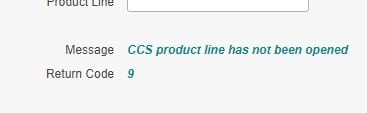
When running a service in WFWK.1, it may produce the error message: “CCS product line has not been opened: Return Code 9”.

If this happens to you, follow these simple steps below to resolve it.


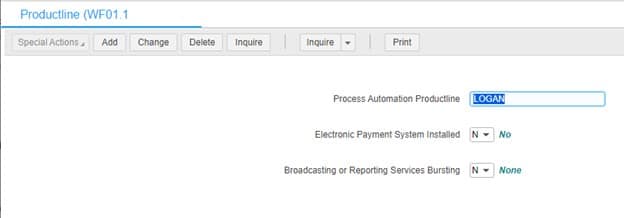
First, you need to start at the application product line, then go to screen WF01.1. Next, “Add” the Process Automation Productline “Logan”.


Next you will need to restart the Lawson services, or restart the Lawson server. Try to run the service in WFWK.1 again.


This should resolve everything and  you should not get the error message again.


***Also, the length of the flow name is limited

Year after year new technology is discovered, improved, and taken to the next level. There is no shortage of innovation in this digital age. Keysight Technologies features an article on Yahoo! Finance highlighting the emerging technology innovation that industry experts predict will thrive in 2023 and beyond.

Quantum – Building the Foundation. “After decades-long hype around quantum computing and quantum systems, the industry will start to realize its potential for creating new opportunities in fields spanning cybersecurity, materials creation, financial analysis, and military receivers. Proactive companies will start investing in quantum, fostering quantum talent within the next generation of workers through university partnerships, hackathons, and other projects. This will create an ancillary boost to DEI initiatives resulting in much-needed diversity in the tech workforce. Recent research revealed that 74% of companies believe they will fall behind if they fail to adopt quantum. As a result, organizations will begin to shift their thinking that quantum is a futuristic technology and begin addressing key challenges, including financial resources and operations, and developing real enterprise applications of quantum by 2026, if not sooner.” – Dr. Eric Holland, Director of Quantum Engineering Solutions

Electric Vehicles – The Construction Industry Goes Green. “To date, EVs have been associated with climate-conscious consumers, but by 2025, expect adoption to come from some surprising sectors. For example, the construction industry stands to reap numerous benefits from utilizing EVs’ excess energy to power machinery that previously required cumbersome generators or numerous extension cords to function.” – Thomas Goetzl, VP & GM Automotive & Energy Solutions

Software Quality – Sustainability of Testing. “Traditional test automation is based on the need to run many fixed tests at defined periods (overnight, weekends and prior to a release, for example). The execution of each test requires significant computing power and thus has both an energy cost and an environmental impact. With the increase in energy prices and the greater awareness of sustainability, this legacy approach of “non-intelligent” test automation will be replaced by intelligent test optimization – in which the goal is to only run the tests that are known to identify a problem.” – Gareth Smith, GM Software Test Automation

6G – New Olympic Sport: The Metaverse. “The 2028 Summer Games will welcome 6G to the global stage. As a worldwide Olympic partner, expect Samsung to unveil a 6G deployment, which will be a pivotal part of how viewers consume events. For example, you can expect one of the two opening ceremonies to happen in the metaverse. The metaverse will also feature prominently in the user experience, enabling fans to participate in some Olympic events. We’ll also see certain sports and, potentially, eSports run a 6G Metaverse Olympics in parallel with the actual Games, with at least one medal awarded within the metaverse. As brands draw inspiration from the Olympics, there will be a subsequent explosion of 6G use cases throughout 2028.” – Colin Bauer, Market Initiative Manager Wireless Communications

Product Development – DIY Digital Twins Will Drive Up Recalls “Faster 5G rollouts are accelerating demand and expectations for adjacent advancements in complex technologies like autonomous driving, new distributed IoT applications, and the rollout of metaverse capabilities. Products involving this level of complexity need to meet more compliance and connectivity standards, operate across a much wider range of often unknown conditions, and are expected to be backward compatible with other systems that are not yet in the market. As a result, I anticipate that product developers will be tempted to build – known as do-it-yourself, or DIY – vs. buy their digital twins. Those taking DIY shortcuts will be leading the spike in product recalls.” – Jeff Harris, Vice President, Corporate & Portfolio Marketing


For Full Article, Click Here

Content contributor Swalé, and founder of  identity platform that identifies value in user profile data and digital interactions Iuncta, shares an article on Forbes on decentralized identity and the future of technology. He enlightens us with a revelation: “My self awareness has helped me to recognize the value of who I am in the physical world and gain an appreciation for my own identity; my relationship to technology has helped me make the connection to the digital world and translated that worth into my online presence; and the part of me that is a technologist has convinced me that online identity is the most valuable thing on the internet.” He once predicted that technology’s path will become decentralized and it has since. Web 3.0, for example, is being built based on a decentralized architecture that emphasizes distributed control across all elements. Since his last successful prediction, Swalé has stated a new one: that the future of technology will be defined by the progress made in decentralizing user identity. Below are three ways he sees identity shaping technology.

Self-Sovereign Identity. “User identity will solve one of technology’s biggest problems: interoperability. It will be the medium though which independent systems interface and communicate with each other. User identity will no longer be proprietary information for third-party platforms because users will have sole ownership of their identity, and they will be able to freely take it and its related data to create a personalized and familiar experience across platforms.”

Meta Humans. “The concept of a digital automaton is no longer conceptual, it is a reality and they exist today as meta humans. The evolution of this will come in the form of donor banks for identity, where users can openly share their identity for some form of payment. That identity will then be replicated and with artificial intelligence create a digital human that can mimic our temperament, cognitive process and behavioral and emotional attributes, and predict our future decisions.”

App Monetization Reversal. “The usership monetization model will be changed, a role reversal of sorts, where users will be paid to use platforms, which directly counters today’s implementation, where users pay for platform membership. Platforms are still going to be profitable over time, but it will involve them making an earlier investment commitment to grow a user base by competing with other platforms for user screen time.”


For Full Article, Click Here

Problem:

No matter what browser I use, when I go back to a bookmarked link I get the following error when I sign in:


“Error encountered while processing the request. Additional information: Bad request cache id. This URL request may already have been processed…”


Resolution:

There is a simple solution to this common error. This is not security-related, but rather a bad link that you may have bookmarked. It’s important to make sure you bookmark the correct link: https://hostname/lawson/portal,so you won’t get this consistent error. Note that if you try to copy the URL before you have fully logged in, the bookmarked link will not work again.

Infor recently announced that VDL Enabling Technologies Group (ETG) of Eindhoven, The Netherlands, is deploying Infor CloudSuite Industrial Enterprise. Infor is supporting VDL ETG with this move to the cloud so the company can modernize its enterprise resource planning (ERP) Baan solution. With Infor CloudSuite Industrail Enterprise for ERP, VDL ETG is able to bring the core production processes, financial and business administration, and various other components to the cloud. Per the press release, the implementation of Infor’s cloud ERP solution will shape the intended digital transformation, further automation of processes, and improved real-time information provision. VDL ETG expects to optimize production quality, efficiency and scalability of operational processes. This deployment of Infor CloudSuite comes at a necessary time for the company because of the rapid developments in the field of semiconductor equipment manufacturing. Further, the implementation of Infor CloudSuite will be carried out in cooperation with implementation partner Merino Consulting Services.


For Full Article, Click Here

Overtime the LSF Lawson directory builds up and may even cause performance issues given the amount of data that may need to be backed up every night. Below are some steps you can take to help analyze and clean up your LSF Lawson directory.


  1. Download and Install the free WinDirStat tool found at https://windirstat.net/
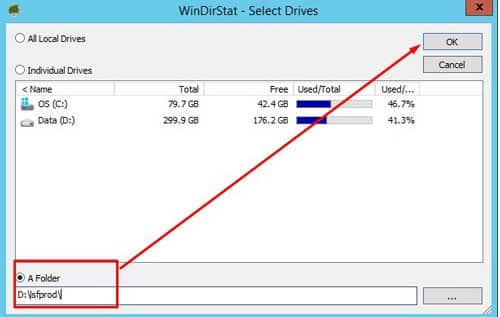
  2. Once you open the tool, select and run it for your local LSF directory:
  3. You may notice right away that 3 directories stand out:
    1. %LAWDIR%\print
    2. %LAWDIR%\work
    3. %LAWDIR%\system\joblog


These directories will fill up overtime as users run batch jobs/reports.

  1. To clean up the work directory, you can expand the directory in Windirstat and manually get rid of large files, outdated reports and files.
  2. For cleaning up the print and joblog directory, Lawson has a utility called deljobhst
    1. To get a more in-depth look at the deljobhst utility see here
    2. NOTE: It is recommended to backup these directories especially if your organization has a retention policy.
  3. Open LID and connect to the environment you want to clean up.
  4. We personally are going to delete all printed reports and joblogs that are over 400 days old.
  5. convertunits.com can help determine what the date is 400 days from today is.
    1. In our case, it is November 26, 2019
  6. In LID, we would run: deljobhst -crj 112619
    1. This would remove all completed jobs (c)
    2. All generated print files associated with batch jobs (r)
    3. All recurring job entries (j)
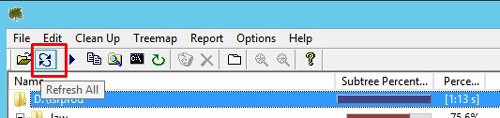
  7. After this completes, if Windirstat is still open, click the refresh all button:

This type of work is typically done by a Lawson technical resource. Organizations often hire a Lawson consultant team who offer managed services at a fixed monthly rate. These Lawson teams have a wider range of expertise and knowledge and are ideal for larger organizations but also are great for smaller ones that don’t need a dedicated Lawson employee on-site. Nogalis does offer this as a service so feel free to reach out to us via our contact page. We typically provide the work above in a monthly or bi-monthly healthcheck that also captures several other key data points to stay proactive with your system before a problem occurs. Hopefully this was helpful!

It’s amazing how one year can make a difference with the latest technology trends. Cryptocurrency was once the most talked about and anticipated topic. Since then, many cryptocurrency-based organizations have collapsed. Is this the end of the push for cryptocurrency? Jordan Yallen, Forbes Council Member and CEO of blockchain technology company MetaTope, believes that blockchain technology still has a lot to offer. “We’re already seeing how blockchain technology can transform some of the world’s most important industries, namely, banking and global finance,” says Yallen. “Blockchain technology is expected to have such an impact on global finance that former SEC Chairman Jay Clayton went so far as to say the future of our financial markets depends on successfully adopting it. Goldman Sachs CEO David Solomon has also praised the technology’s impact on financial markets, arguing it has ‘far-reaching implications for the global economy.'” Yallen shares the three ways blockchain technology is creating transformative change on a global scale:

Cancer Research
“Blockchain technology is helping researchers use AI to accurately predict the presence of cancer in patient tissue samples. A new study by researchers at the University of Leeds in the UK used the swarm learning system to train AI algorithms to accurately detect patterns indicative of cancer in images of patient tissue samples from colon tumors. The team used Ethereum smart contracts to allow three physically separate computers to simultaneously update AI model weights at a designated time without first having to pass the data through a centralized authority.”

Governance
“Blockchain technology is helping governments secure their data and improve various systems. Estonia’s KSI Blockchain has been around since 2012 for everything from issuing Smart ID cards to storing healthcare data. Blockchain technology also underpins Estonia’s land title registry system, creating a secure and publicly verifiable record system for residents to assert property rights. The U.A.E. has also gone all in on blockchain technology in 2016, when they announced the Dubai Blockchain Strategy, an ambitious project to execute all government transactions using blockchain technology and create the world’s first “blockchain-powered city.” The government followed that in 2018 with the Emirates Blockchain Strategy 2021, taking an even more ambitious goal of accomplishing 50% of all national government transactions via blockchain technology. In January of this year, California, home to the most car registrations in the U.S., announced it will be bringing its car title database onto the Tezos blockchain, allowing drivers to hold their car titles as NFTs and streamlining title transfers.”

Logistics
“Blockchain technology is helping logistics companies keep track of shipments as they navigate the increasingly crowded global supply chain. Tech giant Oracle offers Intelligent Track and Trace, a SaaS tool that gives businesses a pre-built blockchain application to track shipments from start to finish. Decentralized blockchain oracle network Chainlink takes things a step further, enabling hybrid smart contracts that communicate with real-world data and services outside of blockchain networks. Chainlink lets companies using blockchain technology give access to off-chain data sources while retaining the blockchain’s security and reliability features. This means logistics companies using one blockchain to track their shipments and another for payments can have the two blockchains communicate and share data, creating more efficient and reliable processes.”

Yallen concludes that Blockchain’s dominance seems inevitable in most, if not all, major global industries. This technology allows for a more more secure, reliable, and efficient business system, and organizations should look for ways to adopt the technology where appropriate.


For Full Article, Click Here