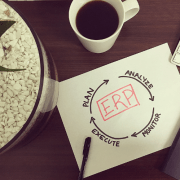

Enterprise resource planning (ERP) systems can be a huge investment for your business: you can become more efficient, your employees more productive and your customers happier. But, if you implement this valuable system wrong, it can cause even more headaches than before. Raihan Islam, Principal Advisor and Startup Coach, shares an article on Computer Weekly of the many reasons why ERP projects go wrong, and how to avoid them when implementing your own. The article discusses the common challenges faced during Enterprise Resource Planning (ERP) implementations and how organizations can recover from these setbacks. Many companies experience ERP horror stories due to poorly planned projects, lack of employee engagement, or inadequate training. The initial promise of streamlined operations can quickly turn into frustration and budget overruns. A key reason for failure is often the neglect of change management, as organizations struggle to adapt to new systems. Resistance from employees can lead to low adoption rates, further complicating the implementation process. The article emphasizes the importance of addressing employee concerns and fostering a culture of openness. Another issue highlighted is the selection of the wrong ERP system, leading to misalignment with business needs. Organizations are urged to conduct thorough assessments of their processes before choosing a solution. This assessment should include input from all stakeholders to ensure the system supports the company’s unique requirements. Islam also stresses the significance of proper training and ongoing support for users. Without comprehensive training, employees may not fully utilize the ERP system, leading to missed opportunities and inefficiencies. Regular feedback sessions can help organizations make necessary adjustments to improve user experience and system performance. To get back on track, the article suggests re-evaluating the ERP strategy and learning from previous mistakes. Engaging in continuous improvement and adopting an agile mindset can foster better adaptability to change. Establishing clear communication channels is also essential for addressing issues as they arise. Moreover, Islam provides insights into overcoming ERP challenges by focusing on employee involvement, proper system selection, training, and continuous improvement. By taking these steps, organizations can transform their ERP initiatives from horror stories into success stories.


 

For Full Article, Click Here

Asaf Kochan, Forbes Council Member and President & Co-Founder of Sentra, shares an article exploring the evolution of data security.  Kochan focuses on the transition from Data Security Posture Management (DSPM) to more comprehensive security platforms. It begins by defining DSPM as a method used to assess and enhance an organization’s data security stance. Traditional data security focused primarily on perimeter defenses, but the increasing complexity of data environments has necessitated a more robust approach. The rise in data breaches and regulatory requirements has pushed organizations to adopt more integrated solutions. In response, many are adopting comprehensive data security platforms that offer not just monitoring but also advanced protection and remediation capabilities. These platforms often utilize machine learning and automation to improve response times and efficiency. Kochan emphasizes the importance of a holistic approach to data security that encompasses all stages of data handling—from storage to sharing and disposal. He suggests that organizations need to align data security with their overall business strategy for effective risk management. The article also highlights the benefits of adopting a unified security framework, which can streamline processes and improve compliance with regulatory mandates. The need for continuous monitoring and adaptive security measures is stressed as essential in today’s evolving threat landscape. Kochan concludes that as organizations continue to evolve their data security strategies, the focus should remain on creating resilient, comprehensive platforms that can adapt to future challenges in cybersecurity.


For Full Article, Click Here

If you are having issues loading your externally facing Lawson Portal, one way to troubleshoot is to set the logs to debug mode so that you can hopefully get more information about the errors.


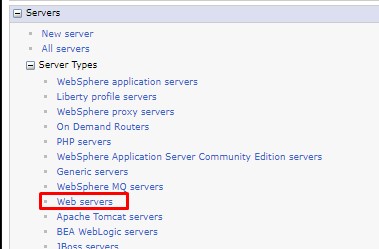
In WebSphere Application Server admin on your internal server, click into the web server under Servers > Server Types > Web servers.

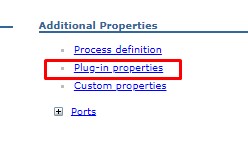
Click the web server name then Click “Plug-in properties”.

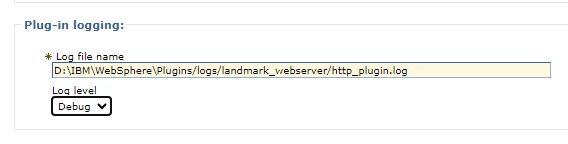
Change the “Plug-in logging” to Log Level “Debug”

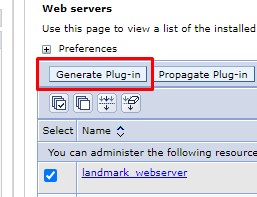
Click “Apply” or “OK”.  Go back to the web server list, and select your web server using the checkbox.  Select “Generate Plug-in”.  Since your web server is external, there is no need to Propagate the plug-ins (this is a manual process).

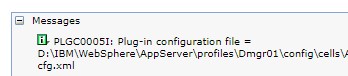
When you generate the plug-in, the location will be displayed at the top of the screen.  Navigate to that location and copy the plugin-cfg.xml file.

Navigate to your external server and paste the plug-in file at <WebSphere Install Directory>/Plugins/config/<webserver name>

Perform an iisreset on the external web server.

Now your web server will be in debug mode, and you will get more detailed information in the plugin logs.


Ransomware has become a significant threat, with attackers increasingly targeting cloud environments. Subject expert Fredrik Forslund of Blanco shares an article on SC Media explaining why classifying cloud data can help organizations mitigate ransomware. One of the key strategies to mitigate this risk is through effective data classification, which allows organizations to identify and prioritize their most critical data. Enhanced classification involves categorizing data based on its sensitivity and importance to the organization. This process enables businesses to implement stronger security measures for their most valuable information. The article highlights various classification methodologies that can be used to assess data risk levels accurately. By understanding which data is most critical, organizations can take proactive steps to protect it, such as implementing advanced encryption and access controls. Forslund also emphasizes the role of continuous monitoring and updating of classification schemes to adapt to evolving threats. Moreover, it points out that proper data classification can aid in compliance with legal and regulatory requirements. Organizations that classify their data can ensure they are meeting necessary standards for data protection. The article concludes that as ransomware attacks continue to evolve, organizations must prioritize enhanced data classification. By doing so, they can not only reduce the risk of attacks but also improve their overall data management strategies. Ultimately, investing in data classification technologies and practices is essential for safeguarding cloud environments and ensuring business continuity.


For Full Article, Click Here

Problem:

You may come across an instance when the MSCM server log for the Picklist scheduler shows the following errors:

“Delta Processing Error: Unparseable date: “##########”

For input string: “####” Record not inserted”


This problem usually means that the shipments are not found on the handhelds – and it’s because of this error causing the missing information.


Resolution:           

To simply amend this, you will need to ensure that the Access flag in Lawson Security is set to “Y” when the ‘lawson’ (this is referring to the lawson.username from the mscm.filter.properties file) user has a requester. Once the setting is changed or confirmed, you should not come across this error anymore.

Many companies are migrating to new enterprise resource planning (ERP) systems. Whether it be to updated systems, a brand new system or a move to the cloud, there are many ways to elevate your integration strategy. Melissa Evatt, Editorial Assistant and writer for cloud platform and technology at ERP Today, shares an article about the importance of elevating your ERP integrations. Consultancy partner Rossera, for example, provides scalable integration solutions through a reusable, silo-free framework. Their approach is aligned with business objectives and incorporates governance mechanisms for effective lifecycle management on Oracle Integration Cloud. Rossera’s integration platform, Scaffold-Once, features built-in engineering enablement, central orchestration, monitoring capabilities, and pre-packaged solutions to streamline integration. Key benefits include the prevention of common integration pitfalls, adherence to best practices, enhanced developer productivity, expedited market delivery, and improved business outcomes. This strategy supports organizations in elevating their ERP integration efforts, ultimately boosting growth and competitiveness. Without a defined integration strategy, businesses may face issues such as integration sprawl, inconsistent standards, poor reusability, scalability challenges, technical debt, security vulnerabilities, and a lack of visibility and control. These challenges can complicate the integration landscape, leading to inefficiencies and obstructing collaboration within organizations. Whether you work with Rossera or another implementation partner, ensure that you are confident of your ERP strategy to fully fit your company’s needs.


For Full Article, Click Here

Question:

Is it by design that the Payroll ACH payments are automatically reconciled in PR85 (Bank Account Reconciliation)?

Why are the AP ACH not automatically reconciled in CB80 (Bank Transaction Adjustment)?


Answer:

There is a setting on the payment code that determines if the transactions are automatically reconciled. Inquire on CB00.4 (Bank Transaction Definition) for ACH and click on the Cash Payment button (CB00.7). Set Automatic Reconciliation to “Y”.

Then when you issue an ACH payment it will be automatically reconciled.  Payments that already exist in the system will not be affected by this change and will still need to be reconciled.

Organizations are increasingly realizing that successful data analytics and artificial intelligence (AI) initiatives rely heavily on cloud infrastructure, marking cloud migration as a critical foundation for effective data strategies and AI innovations. The digital landscape now necessitates an integrated approach where data, AI, and cloud strategies work together synergistically, enhancing each other’s effectiveness and competitiveness in a data-driven economy. Chetan Mathur, CEO of automated cloud migration company Next Pathway, shares an article on Forbes explaining why cloud migration is essential for data and AI strategies for business success.

Mathur first explains how effective AI strategies require robust data management, as high-quality data is essential for AI’s machine learning processes. The data preparation tools market is projected to grow significantly, indicating that optimized data strategy is vital to AI success. Furthermore, modern cloud infrastructure is necessary for scaling and managing AI-ready data, and the global cloud migration services market is expected to expand dramatically. Quick migration from legacy systems to the cloud is crucial for organizations to harness internal and external data for AI applications.

Cloud platforms provide the computational power needed for AI, facilitating the training of complex models and processing large datasets without substantial upfront investment. Successful cloud migrations, such as Airbnb’s transition to AWS, demonstrate the advantages of cloud-based operations for improved performance and scalability.

Additionally, Mathur adds that cloud migration helps eliminate data silos, allowing for unified data access and promoting data-driven decision-making across organizations. New data strategies like distributed data meshes are becoming feasible thanks to cloud infrastructure. With over 95% of new digital workloads expected on cloud-native platforms by 2024, organizations must recognize the importance of aligning cloud migration, data strategies, and AI initiatives to remain competitive.

As the gap between digital leaders and laggards grows, businesses adopting this holistic approach can enhance innovation, efficiency, and competitive edge in the evolving digital landscape. The urgency for action is paramount for organizations looking to thrive in the future.


For Full Article, Click Here

Recent updates for Infor Lawson S3 mainly focus on cloud migration and release schedules for on-premises and single-tenant customers. Notably, starting in 2024, Lawson’s V10 products will follow a new release schedule, with updates in April and October instead of March and September as in previous years. Additionally, annual maintenance service packages (MSPs) will be aligned with the October release, ensuring consistent delivery of security patches, compliance updates, and bug fixes throughout the year.

For organizations still on the S3 platform, there is growing momentum towards cloud migration as Infor promotes its cloud-based ERP solutions, enhancing flexibility, scalability, and data management. Financial and other sector-specific modules for Infor Lawson S3 are increasingly being optimized for cloud use, encouraging businesses to explore cloud adoption for better integration and efficiency.

These changes reflect Infor’s commitment to modernizing its platforms and aligning with evolving cloud standards, improving both the user experience and system performance.

Migrating Lawson S3 to the Infor Cloud with Nogalis offers several advantages. Nogalis specializes in seamless migration processes, ensuring minimal downtime and operational disruptions while optimizing Lawson for the cloud environment. Our team of experts can handle complex integrations and customizations, allowing businesses to leverage Infor Cloud’s advanced features, scalability, and security. With ongoing support and proactive management, Nogalis helps organizations achieve cost savings by reducing the need for on-premise hardware and maintenance, while improving system performance and accessibility across various devices.  And once the move to the cloud is complete, Nogalis can stay on board to provide managed services for all your Infor Cloud products.  Here is some more information about our Managed Service and Project offerings.

When it is time to move to the cloud, Archiving Lawson data using APIX will be crucial. APIX offers a reliable and compliant data archiving solution, allowing businesses to securely store historical Lawson data without burdening the cloud environment.  Additionally, APIX provides a sleek UI that puts historical data at users’ fingertips. Proper archiving helps maintain data integrity and ensures easy access to legacy information for auditing and reporting needs. By archiving Lawson data before migration, businesses can streamline the transition, reduce storage costs in the cloud, and comply with regulatory requirements, all while ensuring that critical data is preserved and accessible post-migration.  Book a demo here!

As cloud adoption increases and becomes the more prominent business solution, there is still a lot of confusion and hesitation about moving to the cloud. Industry expert David S. Linthicum shares an article on InfoWorld.com discussing the ongoing confusion and challenges surrounding cloud security. The article highlights several factors contributing to this confusion, including the evolving nature of cloud technologies, the shared responsibility model wherein cloud providers and customers both have roles in securing data, and a lack of clear communication and understanding among stakeholders. Linthicum explains simply that when it comes to cloud security, prioritization is key. “It is vital to prioritize vulnerability remediation, particularly for areas at high risk. Regular audits and proactive patching can minimize exposure and enhance security resilience,” he states. “Organizations can better protect their cloud infrastructures and safeguard their data assets by evolving from reactive measures to a sustainable security framework, but how the heck do you do this?” Below, Linthicum highlights key areas to prioritize for cloud security to run successfully within your business.

  • Implement strong access control measures. Regularly audit and review access keys to ensure they are necessary and have the appropriate permission level. Rotate access keys frequently and eliminate unused or unnecessary keys to minimize the risk of unauthorized access.
  • Enhance identity and access management (IAM). Implement stringent IAM policies that enforce the principle of least privilege. Utilize role-based access controls (RBAC) to ensure that users only have access to the resources they need to perform their job functions.
  • Conduct regular security audits and penetration testing. Examine cloud environments to identify and address vulnerabilities and misconfigurations before attackers can exploit them. I recommend springing for outside organizations that specialize in this stuff instead of using your own security team. I don’t know how often I have done a post-mortem on a breach and discovered that they have been grading themselves for years. Guess what? They gave themselves an A, and even had that tied to bonuses.
  • Deploy automated monitoring and response systems. Automated tools provide continuous monitoring and real-time threat detection. Implement systems that can automatically respond to certain types of security incidents to minimize the time between detection and remediation.
  • Implement Kubernetes best practices. Ensure that Kubernetes API servers are not publicly accessible unless necessary, and limit user permissions to reduce potential attack vectors.
  • Prioritize vulnerability management. Regularly update and patch all software and cloud services, especially those with high vulnerability priority ratings, to protect against newly discovered weaknesses.
  • Strengthen governance, risk, and compliance (GRC) frameworks. Continually develop and maintain robust GRC practices to assess and improve the effectiveness of security controls. This should include policy development, risk assessment, compliance tracking, and continuous improvement initiatives.
  • Train staff on security awareness. Provide ongoing training and awareness programs for all employees to ensure they understand current threats and best practices for maintaining security within cloud environments. As I’ve stated before, most cloud computing security problems are breathing—people are the key here.

While cloud security can be complex, proactive engagement and informed decision-making can lead to better security outcomes.


For Full Article, Click Here