
The increasing importance of security measures in the digital age highlight the financial implications of cyber threats. Chief Information Security Officers (CISOs) are encouraged to view cybersecurity as a strategic investment rather than a cost center. Tech and business expert Karthik Swarnam, shares an article on MSN and TechRadar on how to maximize cybersecurity return on investment (ROI). The article discusses suggests assessing risk management frameworks to identify critical areas for investment. Establishing clear metrics for evaluating cybersecurity performance is essential. The article recommends leveraging data analytics to measure the effectiveness of security initiatives. Collaboration across departments is crucial for creating a unified approach to security. Engaging with stakeholders can ensure alignment with business objectives and demonstrate the value of cybersecurity investments. The article promotes the idea of continuous education and training for staff to enhance overall security posture. It suggests prioritizing initiatives based on potential ROI and aligning investments with business risks. Furthermore, benchmarking against industry standards can provide insights into effective practices. The use of automated tools is recommended to streamline processes and improve efficiency. Additionally, building a robust incident response plan can minimize losses when breaches occur. The article underscores the need for CISOs to communicate successes to executive leadership, showcasing the value added through security programs. Establishing a strong partnership with IT and incorporating security into the software development lifecycle are also key recommendations. Lastly, adopting a proactive rather than reactive approach can lead to better cybersecurity outcomes and maximize investment efficiency. By focusing on these best practices, CISOs can significantly enhance their organization’s cybersecurity ROI.


 

For Full Article, Click Here

Kris Blackmon, partner marketing director at AvePoint, shares an article on ChannelFutures.com highlighting the critical role of managed service providers (MSPs) and how they help strengthen your organization’s data governance. The article discusses the importance of data governance for Managed Service Providers (MSPs) as data management becomes increasingly critical in today’s digital landscape. It emphasizes three key services that MSPs should provide to enhance their data governance offerings. Firstly, the article introduces data classification, which involves identifying and categorizing data based on its sensitivity and importance. This helps organizations understand their data landscape and manage risks effectively. Secondly, it highlights data lifecycle management, which ensures data is appropriately handled throughout its life—from creation to disposal. Proper lifecycle management helps maintain compliance and reduces the risk of data breaches. Thirdly, the article addresses data protection, emphasizing the need for robust cybersecurity measures to safeguard sensitive information. MSPs must offer solutions that include encryption, backup, and disaster recovery systems. Additionally, the article underscores the role of compliance in data governance. MSPs must keep abreast of the regulatory landscape and help clients navigate complex compliance requirements. By providing these services, MSPs can enhance their value proposition and build stronger client relationships. Furthermore, the article suggests that a proactive approach to data governance can help organizations avoid costly penalties associated with non-compliance. The need for transparency and accountability in data handling is also discussed. Effective data governance frameworks contribute to organizational trust and can enhance reputation. The article concludes by urging MSPs to invest in these key data governance services to stay competitive in a rapidly evolving market. Overall, the focus is on how empowering MSPs with the right tools and strategies can lead to better data governance and improved business outcomes for their clients.


For Full Article, Click Here

To do a full manual recompile of a Lawson Program, follow these simple steps:

  1. Open a LID session
  2. Navigate to <LAWDIR>/<prodline>/map/default
  3. Run the command scrgen <prodline> <system code> <program code>
    1. for example: scrgen prod PO PO54
  4. Run the command xscrgen <productline> <program code>
    1. For example: xscrgen prod PO PO54
  5. Run the command lstinvk -q <prodline> <program code>
    1. For example: lstinvk -q prod PO54
  6. Run the command qcompile <prodline> <system code> <program code>
    1. For example: qcompile prod PO PO54
  7. Use the command qstatus to check the status of the compile


Once the compile is complete, check your program again. That’s all there is to it!


In the prime time of artificial intelligence (AI), consumer trust is more valuable than ever. Greg Brunk Forbes Council Member and Co-founder of MetaRouter, shares an article that highlights how crucial consumer trust is for businesses, particularly as AI technologies become more integrated into everyday life. Transparency is emphasized as a key component in building and retaining consumer confidence. Companies are encouraged to clearly communicate how AI systems work and how consumer data is utilized. Ethical AI practices are also addressed, with the call for fairness and accountability in AI algorithms to prevent discrimination and bias. Brunk suggests that brands should actively engage in discussions about AI-related concerns with their customers. Regular audits of AI systems can help ensure compliance with ethical standards and boost consumer trust. Organizations are advised to prioritize data privacy and security measures to safeguard consumer information. By adopting a consumer-centric approach, businesses can create more reliable AI solutions. Collaboration with stakeholders, including regulators and consumer groups, is recommended to establish trusted AI guidelines. The role of user feedback in improving AI systems is acknowledged as essential for maintaining trust. Companies are advised to be honest about the limitations of AI technology, avoiding overpromising results. The article concludes that by prioritizing transparency, ethics, and engagement, businesses can foster a trustful relationship with consumers in the AI era. Emphasizing the need for a robust ethical framework, the piece argues that these practices can lead to sustained growth and customer loyalty. Ultimately, building consumer trust in AI is both a challenge and an opportunity for businesses looking to innovate responsibly.


For Full Article, Click Here

IPA Service definitions can be used to cause or trigger a process to run.

If your site has an event for which work units are delayed or not running for any reason, you can trigger a process to run using the Service Definition in Process Server Administrator.

A process, which is created using Infor Process Designer, routes and tracks the sign-offs that need to occur. In this case, a service, which is delivered with Lawson applications, triggers the launching of the process. It is also possible to create your own service.

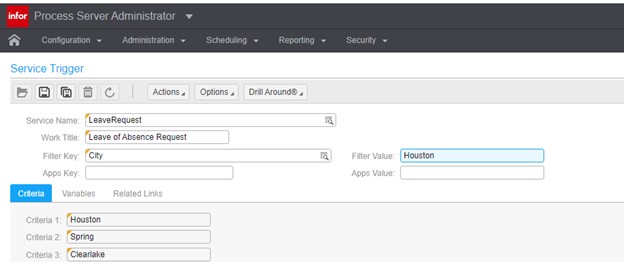
  1. Access the Process Server Administrator and select Scheduling > By Service Definition.
  2. From the displayed list of services, double-click the name of the service that you want to trigger the process.
  3. Specify this information:

Work Title

Specify a name for the work item.

Filter Key

If filters have been enabled for users and tasks associated with this service, select an option.

Filter Value

If you are using a filter key, specify a filter value.

For example, if you selected City for a Filter Key, then Chicago might be a valid value.

Apps Key

Specify an application key.

Apps Value

Specify a value for the selected apps key.

  1. Optionally, on the Criteria tab, specify up to three levels of criteria.
  2. If variables are enabled for the service, the Variables tab is active.
  3. If links to documents or other information is available for use with this service, the Related Links tab is active.
  4. When you are finished defining the circumstances, click Actions > Save.

Jody Brazil, tech expert and CEO/Cofounder of FireMon, shares an article on Forbes that discusses the multifaceted nature of network security and the challenges that come with safeguarding digital environments in today’s technologically advanced landscape. It highlights that network security is not just about deploying the latest technologies but also involves understanding the complexities of human behavior and organizational processes. As cyber threats continue to evolve, companies must remain vigilant and adaptable. The article emphasizes that a robust security posture requires a comprehensive strategy that includes risk assessment, incident response, and continuous monitoring. It points out that lack of awareness among employees can often lead to vulnerabilities, making training and education essential components of any security program. Additionally, the increasing sophistication of cyberattacks necessitates a proactive approach to identify potential threats before they materialize. The significance of collaboration between various departments within an organization is also discussed, as security should not solely fall under the IT department’s purview. Organizations are encouraged to foster a culture of security awareness among all employees to mitigate risks effectively. Furthermore, the article notes that compliance with regulations is important, yet it should not serve as the only benchmark for security standards. External partnerships and information sharing are identified as crucial for enhancing security measures, allowing companies to stay informed about emerging threats. The need for investment in advanced security technologies, such as artificial intelligence and machine learning, is highlighted to better analyze and respond to incidents.


For Full Article, Click Here

Oleksandr Sheremeta, Forbes council member and Managing Partner and Co-Founder at Dataforest, shares an article discussing the concerns enterprises have regarding artificial intelligence (AI) in 2024. Many businesses are increasingly leveraging AI for efficiency and innovation, but they are equally apprehensive about its potential downsides. One of the primary fears is the risk of data breaches and privacy violations, as AI systems often require large amounts of sensitive information to function effectively. Additionally, there are worries about the ethical use of AI, particularly in decision-making processes that could perpetuate biases. The reliability of AI technologies is another significant concern, as businesses fear errors in AI predictions could lead to substantial financial losses or reputational damage. Companies are also facing challenges in compliance with rapidly evolving regulations surrounding AI technologies, adding to their operational burdens. The complexity of managing AI systems is highlighted, as businesses often struggle with integrating AI into existing workflows and technologies. Job displacement due to automation is a lingering fear, with concerns about the impact on employment rates and worker morale. There is also anxiety regarding the control over AI systems, especially if they begin to operate independently or develop unexpected behaviors. The potential for AI to be misused for malicious purposes, such as cyberattacks or misinformation campaigns, poses significant security threats. Furthermore, enterprises worry about the long-term sustainability of AI technologies, considering the environmental impact of massive data centers. The article emphasizes the need for transparency in AI algorithms to build trust among users and stakeholders. Continuous education and training are necessary to bridge the skills gap and prepare the workforce for an AI-driven future. Companies are encouraged to adopt a cautious approach towards AI implementation, balancing innovation with risk management. It is essential for organizations to establish ethical guidelines and robust frameworks to govern AI use. Collaboration between industry leaders, policymakers, and technologists is vital to address these fears and promote responsible AI practices. Overall, while AI holds immense potential, the challenges and fears associated with its adoption remain pressing concerns for enterprises in 2024.


For Full Article, Click Here

To trigger a work unit to process, follow these simple steps below:


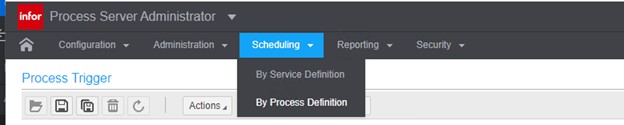
First, you will need to access the Process Server Administrator screen and then select Scheduling > By Process Definition.


Next, select the process name and double click on it.


Then Select Actions > Start. You should now be able to trigger a work unit to process!


The evolving role of the chief information security officer (CISO) is a response to the changing landscape of cybersecurity. Mary K. Pratt, contributing writer for CSO Online, shares an article about how this traditional role, which focused on technical issues and compliance, has since expanded to include strategic, executive responsibilities. As cyber threats become more sophisticated, it’s crucial for CISOs to communicate effectively with other executives and the board. Many organizations are now recognizing the need for a CISO who can bridge the gap between IT and business objectives. This emphasis on business acumen requires CISOs to develop a strong understanding of the organization’s goals and risk tolerance. The article highlights the growing importance of risk management, where CISOs must clearly articulate cybersecurity risks in business terms. CISOs are increasingly being involved in decision-making processes, ensuring that security is considered in all aspects of business operations. As businesses digitize and adopt new technologies, the role of the CISO will continue to evolve, with more focus on proactive measures rather than reactive responses. The challenge of recruiting and retaining skilled cybersecurity professionals remains a significant obstacle for organizations. Pratt notes that the CISO role is often facing high turnover due to the pressure and expectations associated with it. Another trend is the integration of artificial intelligence and automation in cybersecurity strategies, which can help CISOs reduce workloads and improve threat detection. Additionally, it emphasizes the need for continuous education and training for CISOs to keep pace with rapidly changing technologies and threats. CISOs must also focus on fostering a culture of security within the organization, promoting awareness and responsibility among all employees. Collaboration with external partners, such as law enforcement and cybersecurity firms, is essential for enhancing an organization’s security posture. The article concludes by suggesting that the future CISO will need to be a strategic leader, adept at navigating both technological and business challenges while ensuring robust cybersecurity measures are in place. Overall, the CISO’s role is expected to become more prominent and influential in shaping organizational strategy and resilience against cyber threats.


For Full Article, Click Here

End of mainstream maintenance for SAP Crystal Server 2016 and support plan for SAP Crystal Server 2020

We are on Crystal Server/Reports 2016. Do we need to upgrade to Crystal 2020? I only see the 2016 version on the download site.


Infor BI 10.6.30 for Lawson S3/M3 now supports SAP Crystal Reports Server 2020 as a report’s server. As such, this should be reflected accordingly on the LBI installer. Changes were made on the installer to include CRAS 2020.


CRAS 2020 is backwards compatible with reports created in 32-bit. Users just needs to recreate the data source connections in ODBC to ODBC 64-bit using the same Datasource Name. This also means that users will need to install the 64-bit drivers and configure the settings from 32-bit to 64-bit. For MSSQL, the 64-bit drivers are already available once you already have it installed. For other data source type, download the respective 64-bit driver. Same with Lawson OLEDB, Infor has released a 64-bit version, uninstall OLE DB 32-bit and install the 64-bit version.


Since CRAS2020 is a 64-bit application, the JVMMaxHeap value can now be set more than the 3GB limit in D:\BusinessObjects\SAP BusinessObjects Enterprise XI 4.0\java\CRConfig.xml

Open the CRConfig.xml file. Look for the following lines:


<JVMMaxHeap>64000000</JVMMaxHeap>

<JVMMinHeap>32000000</JVMMinHeap>


Change the JVMMaxHeap value more than the 3GB limit. Save and Restart RAS.


Please note that Crystal Designer 2020 will no longer work when installed in the same server as CRAS 2020. In CRAS 4.3 (CR server 2020), it is not supported to install both server side and client side in the same machine. Registry keys may get corrupted.


If you’re interested in moving forward updating your Crystal software, Nogalis offers MSP support to assist with upgrades and migrations.