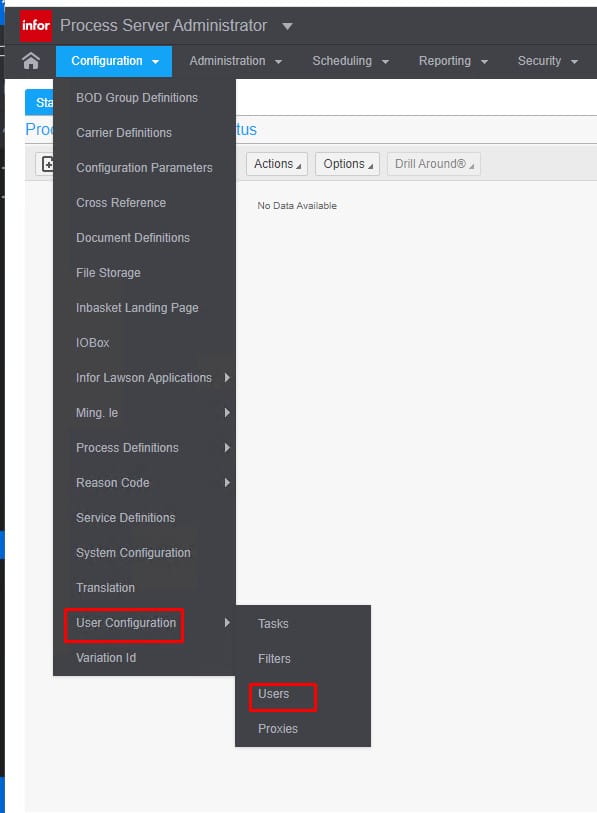
1. Select User ConfigurationUsers.
  2. \
  3. Highlight a user. In User Tasks, click New.


  1. Select a task.
  2. If the assignment is temporary, specify the Startand Stop Dates.

If the assignment is not temporary but will begin on a future date, specify a Start Date only.

If the assignment is immediate and permanent, leave the date fields blank.

  1. Click Save.

Alternatively, you can use this procedure:

  1. Select User ConfigurationTask.
  2. Select a task.
  3. In User Tasks, select ActionsCreate.
  4. Select a user from the User list.
  5. If the assignment is temporary, specify Startand Stop Dates.
  6. Click Save.

There are many pros and cons when using the hybrid cloud model. When utilized right, businesses can leverage hybrid cloud solutions while ensuring their data is secure, efficient, and cost-effective. Ray Sullivan, Vice President of Product Management for Rocket Software, shares an article on TechRadar that discusses strategies for optimizing business data in a hybrid cloud environment. It emphasizes the importance of effectively managing data across both on-premises and cloud infrastructures to enhance performance, security, and cost efficiency. Data integration faces significant challenges with traditional methods, which are resource-intensive and slow, often leading to data replication and synchronization issues. These methods struggle to keep up with the fast-paced changes in business needs and technology, resulting in inconsistencies in data analysis and reporting. A tailored approach to data integration is crucial, particularly in hybrid cloud environments that require effective management of on-premises and cloud data. Successful integration hinges on robust features like encryption, security controls, and efficient data replication, which facilitate real-time synchronization and reduce costs. Real-time data synchronization enhances organizational agility, allowing businesses to quickly identify trends and adapt to market changes, especially in dynamic environments. Sullivan notes that by leveraging cloud capabilities and integrating seamlessly with existing IT infrastructure, companies can drive innovation and growth while maintaining operational efficiency. Overall, effective data management through real-time replication and synchronization is essential for maximizing the benefits of a hybrid cloud setup, transforming unused digital assets into valuable resources for strategic decision-making and future planning.


For Full Article, Click Here

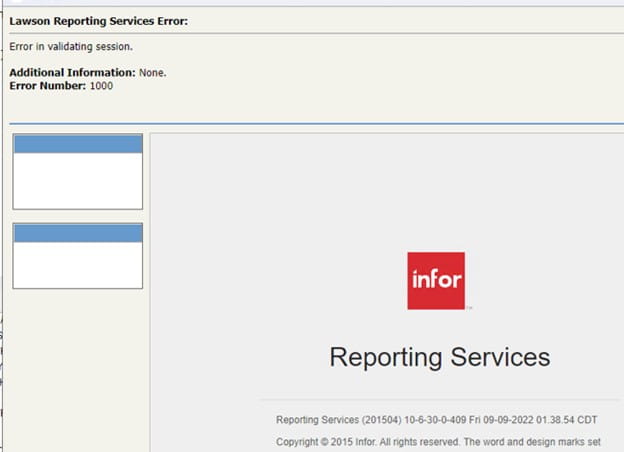
If you’re receiving this error, its usually a simple fix. Also note your IBM Websphere SystemOut.log should be throwing exception errors as well.


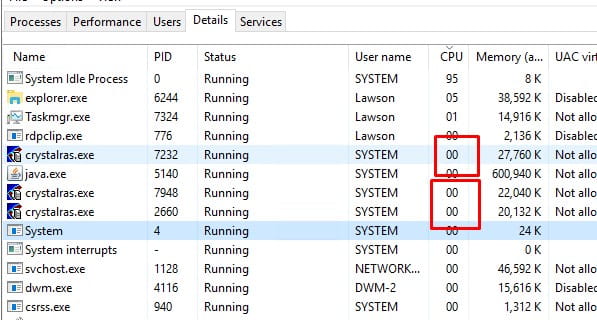
First let’s make sure no crystalras.exe processes are using a lot of CPU power, if they are zeroed out, chances are no one is in the system attempting to run a report:


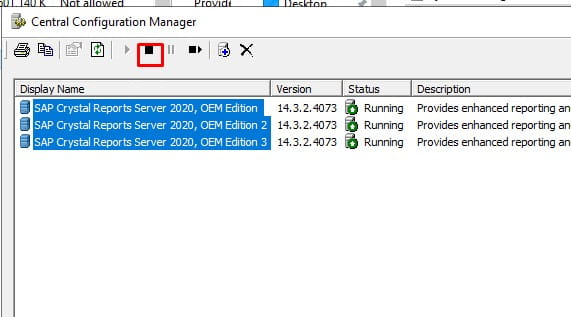
Once that is verified, open up the Central Configuration Manager directly on the LBI server and highlight your SAP Crystal Reports Server processes, click STOP


Wait 10 seconds while they are in STOPPED status, then select and start them back up.

Now log back into LBI and try to run reports.


If this is still not working, try to reboot the entire server again. If it’s not resolved, it’s likely something with your configuration settings.


Good luck!

Artificial Intelligence (AI) has the potential to enhance enterprise resource planning (ERP) functionalities, though many businesses may not yet require an AI-enabled ERP. Angela Tekulve, principal consultant at The Gunter Group, shares an article on ERP Today explaining how AI isn’t a requirement for your ERP systems just yet.  Traditional ERP systems still meet the needs of many organizations, providing the necessary functionalities without the added complexity of AI. Tekulve points out that the implementation of AI in ERP can be costly and complicated, often requiring significant time and resources for integration. Additionally, many companies may not have the data quality or quantity necessary for AI to deliver meaningful insights. Businesses should first focus on optimizing their existing ERP systems before considering AI features. The article also notes that the hype surrounding AI can lead to unrealistic expectations, making it crucial for organizations to assess their actual needs. AI can be beneficial for specific use cases, but it’s not a one-size-fits-all solution. Tekulve encourages companies to evaluate their current processes and determine if an AI-enabled ERP would provide tangible benefits. Moreover, the article highlights the importance of change management and employee training in the successful adoption of any ERP system, including AI-enabled ones. Many organizations may struggle with the cultural shift that AI integration necessitates, making it important to prepare staff accordingly. Tekulve concludes that while AI in ERP systems holds promise for the future, businesses should not rush into adoption without careful consideration of their unique circumstances. Instead, they should focus on maximizing the value of their current systems and ensure they have the right infrastructure and data in place before pursuing AI capabilities.


For Full Article, Click Here

Infor’s Will Quinn, supply chain and logistics expert, discusses on Enterprise Times the transition from Industry 4.0 to Industry 5.0 in manufacturing, emphasizing the need for a more human-centric approach. Industry 5.0 aims to integrate advanced technologies like AI and robotics with human skills, fostering collaboration between machines and workers. This shift is driven by the desire for increased personalization, sustainability, and resilience in production processes. Quinn highlights how Industry 5.0 focuses on enhancing the role of humans in manufacturing, promoting creativity and innovation. By leveraging data analytics and smart technologies, companies can optimize operations while prioritizing employee well-being. The article also emphasizes the importance of sustainability, with manufacturers urged to adopt eco-friendly practices and circular economy principles. Moreover, he outlines the challenges that companies may face during this transition, including the need for workforce retraining and changes in organizational culture. Successful implementation of Industry 5.0 will require collaboration between various stakeholders, including governments, businesses, and educational institutions. Quinn concludes by stating that embracing Industry 5.0 can lead to more resilient and adaptable manufacturing sectors, ultimately benefiting both the economy and society.


For Full Article, Click Here

If you have a job in job schedular that has a status of Waiting or Waiting on Time and you would need it to run immediately, you can assign the highest priority to the job and it will run immediately on the designated queue regardless of how congested the job queue is. If another job that calls the same program in the same data area is already running, however, the selected job is given a status of Waiting Step and is still listed on the Waiting Jobs form.

To run a waiting job immediately

  1. Access Job Scheduler and click the Waiting Jobs button.
  2. Select the Waiting or Waiting on Time job that you want to run.
  3. From the Actions menu, select Run Job Immediately.
  4. If you want to change the job queue, select the name of the job and click Change.

This job queue overrides the job queue assigned for the job when it was submitted. If you do not assign a job queue, Job Scheduler assigns the default job queue (**********).


Artificial Intelligence (AI) and innovations in data continue to transform and define business success. This year we’ll see more prevalence in AI and other innovations. Venkat Achanta, EVP and CTO of TransUnion, shares an article on CIO.com prediction technology trends emerging this year and beyond. “The reality is that AI is here to stay and will play a massive role in the future of global technology, how consumers interact with it and the way businesses operate,” Achanta notes. Below are his five predictions on how emerging technology, including AI, and data and analytics advancements will help businesses meet their top challenges in 2025 – particularly how their technology investments will drive future growth.

  • Prediction #1: AI will enable omni-channel, interaction-based identity to maximize every customer’s experience and value.
  • Prediction #2: Brands will differentiate and delight with Gen AI and extreme customer insight.
  • Prediction #3: Superior guardrails and governance will spur innovation.
  • Prediction #4: 2025 will be a RAG to riches AI story.
  • Prediction #5: There will be a new wave of Data and Analytics DIY.


For Full Article, Click Here

Infor previously announced that all versions of on-premises Infor OS and Infor OS Lite products would transition from Supplementary Update Maintenance to Sustaining Maintenance by December 31, 2024. This transition has been extended to March 31, 2025, for on-premises Infor OS and Infor OS Lite products used with Infor Lawson V10 applications.  This does NOT affect cloud customers.

On-Premise Products Affected:

  • Infor Lawson System Foundation (LSF)
  • Infor Human Resource Management (HRM)
  • Infor Lawson Enterprise Financial Management (EFM)
  • Infor Lawson Supply Chain Management (SCM)
  • Other products within the Infor Lawson V10 suite

Action Required:

Customers using on-premises Infor Lawson V10 applications with on-premises Infor OS or Infor OS Lite must migrate or upgrade to the Infor Local Technology Runtime (LTR) platform before March 31, 2025.

On-premises Infor Lawson V10 applications are certified for use with the Infor LTR platform. For details on the required Infor Lawson V10 versions compatible with Infor LTR, refer to the Infor Lawson Compatibility Matrix available on Infor Concierge under Important Documents > Lifecycle Policies tab.

For more information, please review Knowledge Base (KB) article 3531027, which includes the original product announcement and an FAQ document.

NOTE that if you do not see Infor LTR in your product downloads, you will need to schedule some time with your account representative to get the product for you.

 

SC Media’s article on cloud security challenges for data engineers discusses the increasing cloud security challenges faced by data engineers as organizations shift to cloud-based systems. As data migration to the cloud accelerates, engineers must navigate complex security frameworks and ensure compliance with various regulations. The rapid adoption of cloud technologies has led to a surge in cyber threats, making data security a top priority. Data engineers are tasked with implementing robust security measures, which include encryption, access controls, and regular audits. Additionally, the article highlights the importance of understanding shared responsibility models, where both cloud service providers and users have roles in safeguarding data. Moreover, the skills gap in cybersecurity poses a challenge, as many data engineers may lack extensive training in security practices. The article emphasizes the need for ongoing education and awareness in security protocols to mitigate risks. Collaboration between data engineering teams and security professionals is vital to address vulnerabilities effectively. Ultimately, the article underscores that as organizations embrace cloud solutions, prioritizing security will be crucial to protect sensitive data and maintain trust.


For Full Article, Click Here

Infor NexusTM , the single-instance supply chain network platform providing unparalleled visibility and collaboration, announced last week their latest solution NexTrace, which is designed to improve customer transparency and provide a competitive advantage. The EU Digital Product Passport (DPP) is set to take effect in 2027, where companies need to start preparing now by implementing traceability solutions. NexTrace can give customers a head start to meet regulatory requirements like the EU DPP and the Corporate Sustainability Due Diligence Directive (CSDDD). Per the press release, NexTrace provides end-to-end transparency by seamlessly tracking raw material through to finished products and beyond, ensuring full traceability throughout the entire supply chain journey. It integrates supplier ESG data and certificates for a holistic view of sustainability and compliance information. Leveraging AI technology and a supplier-centric philosophy, NexTrace simplifies the data collection process, ensuring accuracy and compliance.

Below are NexTrace Capability Highlights:

  • Enables seamless lot and item-level tracing by tracking the movement of raw material lots and batches through their conversion into finished products
  • Leverages AI to collect data from the multiple tiers of suppliers, while automatically associating transactions from one tier to the next, helping to reduce the burden on suppliers and increase data accuracy and tracing efficiency
  • Allows suppliers to upload data from existing reports in one easy step, rather than necessitating manual data entry
  • RFID scanning of serialized barcodes at source automatically links the multi-tier chain of custody data
  • Integrates supplier ESG data and certificates with traceability information, providing a comprehensive view of sustainability and compliance throughout the supply chain
  • Creates a digital link and visualization to share traceability and product information with consumers, enhancing transparency and trust throughout the supply chain
  • Tracing data automatically updates the network graph creating linkages between products and materials providing a higher fidelity map of your supply chain network


For Full Article, Click Here