
844-NOGALIS (844-664-2547)
Nogalis, Inc.
  • Link to Facebook
  • Link to X
  • Link to LinkedIn
  • Link to Mail
  • Company
    • News, Events and Articles
    • About Us
  • Products
    • Infor Lawson Data Archive
    • PeopleSoft Data Archive
    • Oracle Data Archive
  • Services
    • Infor Lawson Support
    • Infor Lawson / CloudSuite Consulting
  • Education & Training
  • Support
  • Contact Us
  • Click to open the search input field Click to open the search input field Search
  • Menu Menu

Archive for category: News

You are here: Home1 / News, Events and Articles2 / News

Infor Unveils Built-for-Industry AI Agents to Revolutionize Operational Workflows

News

Infor recently announced the launch of a new generation of AI (artificial intelligence) agents built specifically for different industries—manufacturing, distribution, and services. Per the press release, these aren’t generic chatbots; they’re role‑based agents designed to understand the workflows, compliance rules, and data landscapes of micro‑verticals like EV manufacturing, textile production, or healthcare supply chains.

What makes these agents special?

  • Built on domain knowledge. Backed by Infor’s industry process catalogs and value maps, the agents carry built‑in expertise for things like procurement, supply chain, workforce, projects, and product lifecycles.

  • Role‑aware intelligence. Whether you’re a buyer, project manager, or financial analyst, the agent tailors its recommendations using real‑time enterprise data (both from Infor and external systems).

  • Scalable orchestration. The “Infor Agentic Orchestrator” handles coordination across agents, systems, and workflows. It’s built with Amazon Bedrock, LangChain, and governance tools to keep everything transparent and auditable.

Supporting moves: Cloud migration + smarter process mining

To help customers transition smoothly, Infor is introducing Infor Leap — a cloud migration offering with fixed timelines, fixed pricing, and built‑in safeguards (including an opt-out clause) to reduce migration risk. Additionally, Infor is boosting its process mining with generative AI capabilities to automatically summarize process overviews, improve dashboard flexibility, and help teams spot bottlenecks more quickly.  Infor argues that generic AI solutions often fall short in industrial environments because they don’t grasp domain context. Their new agents aim to fix that by bringing precision, speed, and industry awareness to decision support systems. Early customer feedback is positive—companies say they’re able to cut down manual efforts, accelerate insight delivery, and free staff for higher‑value tasks


 

For Full Article, Click Here

10/13/2025
https://www.nogalis.com/wp-content/uploads/2017/04/infor_sign.jpg 578 770 Angeli Menta https://www.nogalis.com/wp-content/uploads/2013/04/logo-with-slogan-good.png Angeli Menta2025-10-13 09:34:122025-10-09 13:07:30Infor Unveils Built-for-Industry AI Agents to Revolutionize Operational Workflows

Weekly Patch Notification: October 11, 2025

Articles, Frontpage Article, News
Read more
10/11/2025
https://www.nogalis.com/wp-content/uploads/2025/10/Weekly-Patch-Notification-October-11-2025.jpg 427 470 Angeli Menta https://www.nogalis.com/wp-content/uploads/2013/04/logo-with-slogan-good.png Angeli Menta2025-10-11 19:39:432025-10-31 13:45:35Weekly Patch Notification: October 11, 2025

User Does Not Have Access To Submit Job; security violation

Articles, Frontpage Article, News

Description:

Error when accessing a form in Lawson Portal
” An Error occurred outside of IOS while accessing Lawson Security” then “No Programs or bookmarks were found for ‘<token>‘.”

You may find this stack trace in the lase_server_x_x.log and ios.log files:

Stack Trace : com.lawson.lawsec.author.runtime.LawsonSecurityException:Exception while checking security on token <FIELD-NAME> for user <username>. Message: org.mozilla.javascript.EcmaError: ReferenceError: “MISSING” is not defined. (<RuleAttribute>#1)
Stack Trace : org.mozilla.javascript.EcmaError: ReferenceError: “MISSING” is not defined. (<RuleAttribute>#1)
 

Resolution:

This message in the ios.log file indicates the security server (LASE process that runs) lost its connection to the ldap instance where the rules are stored for Lawson Security.

Run a User Security Report for the application profile in question. Within that report, look for the word MISSING on the right hand side of the report where the ruleText is listed.
Most of the time, when this error is presented, you can use the Lawson Security Administrator (LSA) tool to fix the issue without doing a full restart of the Lawson related services.

If you do see the word MISSING, do the following from within the LSA tool:

  1. Click on “Server Management”
  2. Click on “Clear Cache”
  3. Go open a brand new browser session.
  4. Log into Infor Lawson for Portal as a “Portal Administrator” and run the “Clear IOS Cache” option.
  5. Ask one of the users to open a new browser session, not a new TAB within an existing browser, then duplicate the issue.
10/10/2025
https://www.nogalis.com/wp-content/uploads/2025/10/User-Does-Not-Have-Access-To-Submit-Job.jpg 470 470 Angeli Menta https://www.nogalis.com/wp-content/uploads/2013/04/logo-with-slogan-good.png Angeli Menta2025-10-10 07:58:002025-10-06 14:01:56User Does Not Have Access To Submit Job; security violation

5 Biggest Challenges in Modern Distribution Solved With ERP

News

The distribution industry faces several challenges in today’s fast-paced market. Fortunately, ERP (Enterprise Resource Planning) systems offer solutions that can streamline operations and improve efficiency. In his article for Global Trade Magazine, Ryan Condon explores how ERP systems are addressing key challenges in modern distribution. From inventory management to customer relationships, ERP offers powerful solutions to streamline operations and boost efficiency. Here’s how ERP can tackle five major hurdles in distribution:

  1. Inventory Management. Distributors often struggle with keeping accurate track of stock levels. ERP systems provide real-time inventory updates, ensuring better stock control and reducing the risk of overstocking or stockouts.
  2. Order Accuracy. Inaccurate orders can lead to delays and customer dissatisfaction. ERP systems improve order accuracy by automating the order-to-shipment process, minimizing human error, and ensuring timely deliveries.
  3. Supply Chain Visibility. Lack of visibility across the supply chain can hinder decision-making. ERP systems offer real-time tracking of shipments and inventory, improving visibility and helping businesses anticipate issues before they arise.
  4. Customer Relationship Management (CRM). Managing customer relationships is crucial in the distribution industry. ERP integrates CRM tools, giving distributors a complete view of customer interactions, preferences, and buying patterns, enabling personalized service and stronger relationships.
  5. Data-Driven Decision-Making. Without accurate data, decision-making becomes a guessing game. ERP systems centralize data from multiple sources, offering actionable insights and empowering managers to make informed decisions quickly.

Condon concludes that by addressing these common challenges, ERP systems help distributors operate more efficiently, reduce costs, and enhance customer satisfaction. The future of distribution lies in leveraging the power of integrated technology.


For Full Article, Click Here

10/09/2025
https://www.nogalis.com/wp-content/uploads/2021/04/Infor-wms-supply-chain.jpg 333 500 Angeli Menta https://www.nogalis.com/wp-content/uploads/2013/04/logo-with-slogan-good.png Angeli Menta2025-10-09 10:13:402025-10-08 13:19:425 Biggest Challenges in Modern Distribution Solved With ERP

The Great Transformation: Why Cloud ERP Must Be the Strategic Nerve Center for Modern Manufacturing

News

The food, beverage, and consumer products industries have always faced complexity, but today that complexity has morphed into volatility. In a recent article on Consumer Goods Technology written by Stephen Dombroski, Director for the Consumer Products and Food & Beverage vertical markets at QAD, explains how businesses need to rethink their ERP systems to survive in this unpredictable environment. Legacy ERP systems are no longer cutting it. In a world where disruptions are constant and consumer behaviors are shifting rapidly, companies need real-time visibility and adaptability. This is where cloud-based ERP systems come into play. They’re not just about modernization—they act as the strategic foundation for operational transformation. With cloud ERP, manufacturers can respond quickly to disruptions, predict issues before they arise, and integrate data from across their entire supply chain for better decision-making.

Dombroski highlights four critical pillars for agility:

  1. Cloud ERP as the intelligence core for real-time insights.
  2. Integrated planning powered by AI for scenario-based adjustments.
  3. Optimized scheduling to maximize production capacity.
  4. Connected workforce tools that empower employees with real-time data.

Despite the clear benefits, many manufacturers hesitate to switch from their outdated systems due to concerns about disruption. However, the real risk lies in doing nothing. The companies that will thrive in the next decade will be those who view ERP not as a cost, but as a value-driving tool that shapes strategy and drives agility. As Dombroski puts it, ERP of the future doesn’t just track operations—it drives them.


For Full Article, Click Here

10/08/2025
https://www.nogalis.com/wp-content/uploads/2020/08/ERP-eCommerce-logistics.jpg 400 600 Angeli Menta https://www.nogalis.com/wp-content/uploads/2013/04/logo-with-slogan-good.png Angeli Menta2025-10-08 11:27:102025-10-06 15:30:32The Great Transformation: Why Cloud ERP Must Be the Strategic Nerve Center for Modern Manufacturing

Start a Clean Compile of all Lawson Programs

Articles, Frontpage Article, News

This article will demonstrate how to clear out a Lawson system so that you can start a completely fresh compile of the full productline.

First, open a command line utility with the Lawson environment variables set.  Then, navigate to LAWDIR\<pdl>.

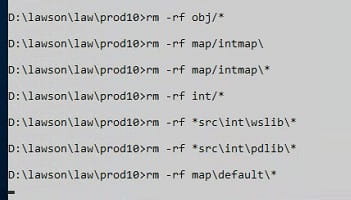
Next, run the following command: rm -rf on the following directories (for visual reference, look at the screenshot below and make sure that your screen matches all of the commands):

  • obj\*
  • map\default\*
  • map\intmap\*
  • int\*
  • *src\int\wslib\*
  • *src\int\pdlib\*
  • sdlib\*

Finally, run the command combcmp <pdl>.  If everything was run correctly, then this will recompile every program in the productline and create fresh compiled code.


10/07/2025
https://www.nogalis.com/wp-content/uploads/2025/10/Start-a-Clean-Compile-of-all-Lawson-Programs.jpg 470 470 Angeli Menta https://www.nogalis.com/wp-content/uploads/2013/04/logo-with-slogan-good.png Angeli Menta2025-10-07 08:52:322025-10-06 13:57:31Start a Clean Compile of all Lawson Programs

How Cloud ERP Is Transforming Enterprise Efficiency

News

As businesses in the Asia Pacific (APAC) region accelerate their digital transformation, Cloud ERP (Enterprise Resource Planning) has become a key technology driving change. According to an article by technology writer and editor Maya Derrick in Technology Magazine, unlike traditional on-premises systems, Cloud ERP offers businesses real-time visibility, improved scalability, and the agility to adapt quickly to market shifts. By consolidating critical functions like finance, supply chain, HR, and customer engagement into one unified system, Cloud ERP boosts operational efficiency and empowers decision-makers with data-driven insights. This integrated approach helps organizations make faster, more informed decisions and enhances overall business performance. However, the transition to Cloud ERP comes with challenges. Businesses must navigate issues like integrating with legacy systems, ensuring data security, and complying with regional regulations. For companies in APAC’s diverse economies, customizing ERP strategies to meet local needs while maintaining global consistency is crucial. Real-world examples highlight the power of Cloud ERP. FCM Travel Asia for instance has used Cloud ERP to streamline operations, cutting end-of-month reporting from several days to just one. The system’s AI-powered dashboards provide real-time insights, automating tasks and improving efficiency. As businesses continue to adopt Cloud ERP, the benefits of improved efficiency, scalability, and innovation are becoming increasingly clear.


For Full Article, Click Here

10/06/2025
https://www.nogalis.com/wp-content/uploads/2016/05/erp-cloud-it.jpg 325 586 Angeli Menta https://www.nogalis.com/wp-content/uploads/2013/04/logo-with-slogan-good.png Angeli Menta2025-10-06 13:47:282025-10-06 13:51:14How Cloud ERP Is Transforming Enterprise Efficiency

Updating Lawson Database Tables to match Custom Form field changes

Articles, Frontpage Article, News

If you need to update Lawson database tables to match custom form field changes, follow these steps:


First update your .scr forms, kndef, skndef fields if creating new columns. Updated your .sr file to include any additional fields if needed.

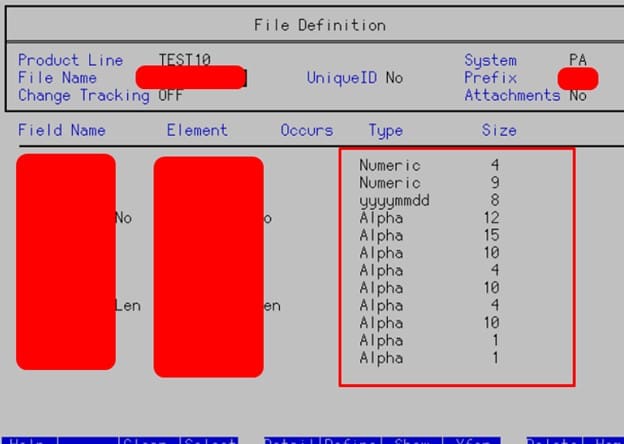
Then in dbdef <productline>

F6 (Define) >> Files and update the database table names

Once done, follow these procedures:

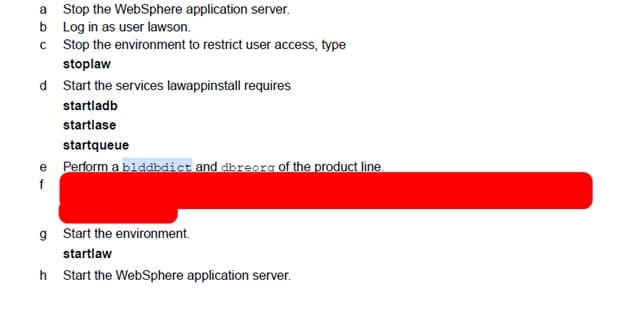
You can run a bldddbdict <productline>

Then dbreorg -l <productline> to see affected tables.

Then dbreorg <productline> to complete the dbreorg.

NOTE: If DBReorg fails, make sure websphere apps are down and java processes are not running, try and restart server then perform dbreorg again if needed.

Qcompile your file and clear cache/ios cache, then test changes.

10/03/2025
https://www.nogalis.com/wp-content/uploads/2025/09/Updating-Lawson-Database-Tables-to-match-Custom-Form-field-changes.jpg 470 470 Angeli Menta https://www.nogalis.com/wp-content/uploads/2013/04/logo-with-slogan-good.png Angeli Menta2025-10-03 08:19:552025-09-25 12:50:45Updating Lawson Database Tables to match Custom Form field changes

How Agentic AI Is Quietly Rewriting The Rules Of Organizational Efficiency In ERP And Beyond

News

In a recent Forbes article, Komal Goyal, CEO of 6e Technologies, highlights how Agentic AI (artificial intelligence) is quietly revolutionizing enterprise operations—starting with ERP (enterprise resource planning) systems. While traditional automation and AI have improved efficiency, they remain rigid, requiring human input when priorities shift. Agentic AI changes that by acting independently, learning from context, and adapting in real time.

In ERP environments Agentic AI has shown the potential to cut process times by up to 60%. From invoice approvals to order fulfillment, it dynamically manages workflows, reducing errors and removing delays.

Key strengths of Agentic AI include:

  • Goal-Based Execution: Agents pursue business outcomes, not just tasks.
  • Real-Time Adaptation: They adjust actions based on live data.
  • Continuous Learning: Agents improve from past decisions and user interactions.
  • Exception Handling: Recurring issues are resolved without human escalation.

Beyond ERP, Goyal notes that Agentic AI connects siloed systems like HR, CRM, and IT, orchestrating workflows across departments. For example, when a new hire is onboarded, an agent can coordinate access, equipment, and provisioning—without manual follow-up. However, success requires more than tech. Goyal suggests that organizations need clear goals, high-quality data, operational oversight, and cross-functional buy-in. Change management and human involvement remain critical. Agentic AI is not just a tool—it’s a shift in how organizations operate. The real differentiator won’t be adoption, but how wisely it’s used.


For Full Article, Click Here

10/02/2025
https://www.nogalis.com/wp-content/uploads/2024/11/artificial-intelligence-ai-technology.jpg 300 450 Angeli Menta https://www.nogalis.com/wp-content/uploads/2013/04/logo-with-slogan-good.png Angeli Menta2025-10-02 11:54:142025-10-01 11:58:31How Agentic AI Is Quietly Rewriting The Rules Of Organizational Efficiency In ERP And Beyond

Digital adoption platforms: The overlooked Key to ERP success

News

Enterprise Resource Planning (ERP) systems are a huge investment for organizations, promising efficiency, compliance, and a competitive edge. But often, the real value falls short—because employees struggle to adopt the new systems at scale. In fact, poor user adoption is the top barrier to ERP success, not the technology itself. According to a recent article on MSN, Digital Adoption Platforms (DAPs) are the missing link that can help organizations overcome this challenge.

By offering on-the-job guidance, DAPs help employees navigate complex ERP tasks and adapt quickly to system updates—without the need for helpdesks or manual guides. They bridge the gap between training and real-world application, making sure the system’s potential is realized.

However, DAPs aren’t foolproof. If not implemented wisely, they can overwhelm users with too much guidance or become outdated. To get it right, organizations should follow these best practices:

  • Start Small: Focus on 5-8 high-impact processes where adoption is most critical.
  • Establish Governance: Create a Center of Excellence (COE) to regularly update and manage DAP content.
  • Tie Adoption to System Updates: Instead of retraining the entire workforce, provide quick, in-context updates directly within the system.
  • Respect Data Privacy: Ensure compliance with laws like POPIA and anonymize user data where possible.

Looking ahead, DAPs will integrate with AI and process intelligence, providing more targeted, real-time support. They’ll also help ensure compliance is built into workflows, reducing audit risks.

In short, DAPs can be the missing link between your ERP investment and real business transformation. When used correctly, they drive smoother adoption, faster results, and better long-term outcomes.


For Full Article, Click Here

10/01/2025
https://www.nogalis.com/wp-content/uploads/2016/02/ERP.jpg 288 432 Angeli Menta https://www.nogalis.com/wp-content/uploads/2013/04/logo-with-slogan-good.png Angeli Menta2025-10-01 12:24:182025-09-26 12:28:39Digital adoption platforms: The overlooked Key to ERP success
Page 22 of 232«‹2021222324›»

LEGACY ERP DATA ARCHIVE SOLUTION


Discover how our clients are leveraging AWS services to archive their Legacy ERP data and provide ubiquitous access to users via a light-weight, secure, and read-only web interface. Secure, Fast, Reliable, and Cost Effective. That is the promise of APIX. Follow the link below to find out more and book a discovery call with our data archive specialist.

BOOK DEMO

© Copyright - Nogalis, Inc. 2024
  • Legal
  • Privacy
  • Contact Us
Scroll to top Scroll to top Scroll to top