
What is ADFS?
There has been a lot of confusion in the Infor client community lately over what ADFS is and what the impact of implementing it will be on the organization as a whole.
Active Directory Federation Services (ADFS) is a Microsoft solution created to facilitate Single Sign-On. It provides user with authenticated access to applications like Lawson without the need to provide the password information to the application.
ADFS manages user authentication through a service hosted between the active directory and the target application. It grants access to application users by using Federated trust. The users can then authenticate their identity through Single Sign-On without having to do so on the application itself. The authentication process is usually as follows:
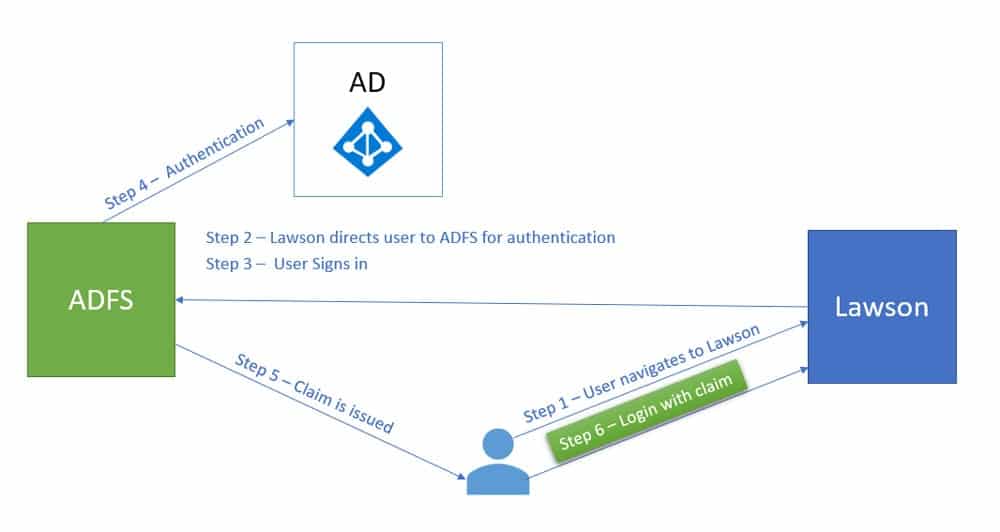
1) The user navigates to the Lawson URL
2) The unauthenticated user is re-directed to the ADFS service
3) The user signs into ADFS
4) ADFS service authenticates the user via the Active Directory
5) The user is then given an authentication claim (in the form of a cookie) by the ADFS
6) The user is forwarded to the Lawson application with the claim which either grants or denies access based on the federated trust service
Note: The Lawson Server never sees the password information which in the case of external applications (like a cloud implementation) is a lot more secure.
What are some drawbacks of implementing ADFS?
Although ADFS is a new requirement, it comes with a few small drawbacks that you should consider:
– The additional server license and maintenance – You will need an additional server (likely one per environment) to host ADFS
– ADFS is actually somewhat complex and this new skill set can create a new challenge for smaller clients who aren’t already using ADFS for other applications
– A standard ADFS installation is not all that secure and several steps should be taken to ensure good security. Microsoft provides these best practices recommendations: https://docs.microsoft.com/en-
There is also a great free e-book published by Microsoft about claims-based identity and access control: https://docs.
To find out more about ADFS and how it can impact your organization, join our webinars or contact us.
Retiring Lawson, PeopleSoft, or Oracle? APIX archives the entire application — every table, every year, attachments and security included — into your own AWS account in about 30 days, so you can decommission the legacy system and keep full access to the history.

